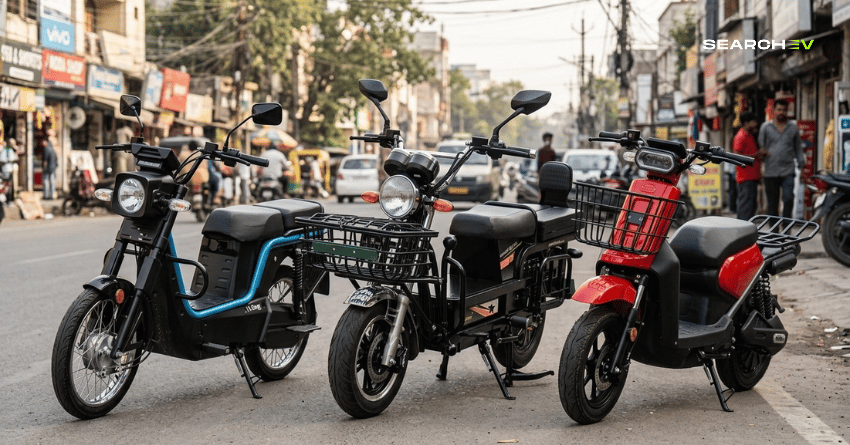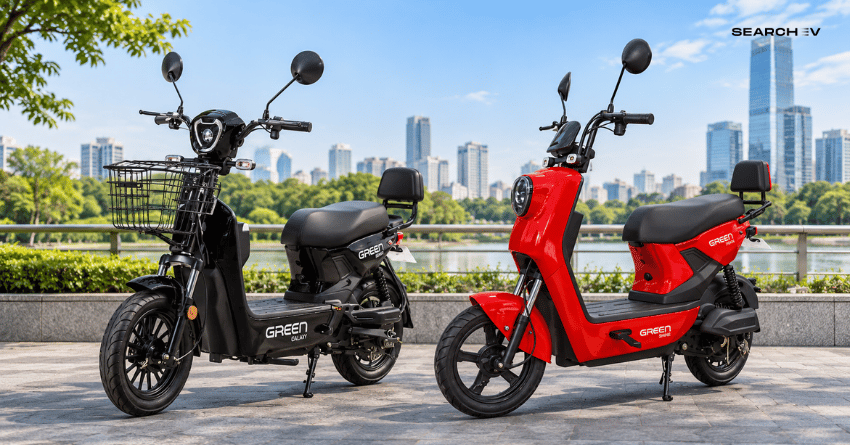
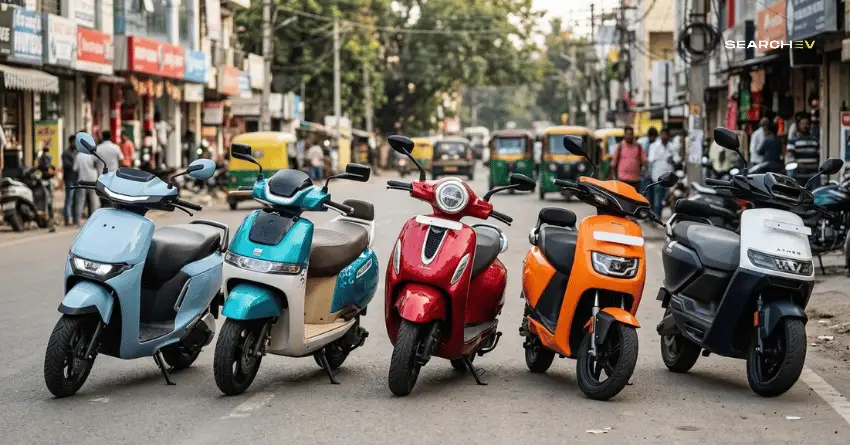
An electric scooter can be a practical choice for students who travel to college, coaching classes, part-time jobs or meet-ups every day. With lower running costs than petrol scooters and the convenience of home charging, electric two-wheelers can make daily commuting easier without adding a regular fuel expense to a student’s budget.
However, the best electric scooter for a student is not necessarily the one with the longest claimed range or the most features. Purchase price, real-world range, ease of handling, charging access, service support and safety should all influence the decision.
In this guide, we look at electric scooters worth considering for students in India, what makes each one suitable and what to check before buying.
What Should Students Look for in an Electric Scooter?
Before comparing models, it helps to understand what matters most for student use.
1. Affordable purchase price
Students and families usually have a fixed budget. Look beyond the advertised starting price and check the complete on-road cost, including insurance, registration and any optional accessories.
2. Enough range for everyday travel
Calculate the total distance covered in a typical day, including college, tuition, errands and the return journey. Choose a scooter with enough range to complete that route comfortably without needing to charge during the day.
Remember that the certified range is a test-cycle figure. Actual range can vary with speed, rider weight, traffic, road conditions, riding mode and weather.
3. Easy charging
A scooter that can be charged at home is convenient for students. If you live in a hostel, apartment or rented accommodation, check whether you are allowed to charge the vehicle in the parking area. Also check whether the charger is portable and whether the battery can be removed.
4. Comfortable and manageable design
A student may use the scooter in crowded campus areas and busy city traffic. A manageable kerb weight, comfortable seat, predictable brakes and easy low-speed handling are more useful than performance figures alone.
5. Service support
A low purchase price is not much of an advantage if the nearest authorised service centre is far away. Check service availability in your city and ask about battery and vehicle warranty coverage.
Best Electric Scooters for Students in India
The following models cover different student requirements, from affordable everyday commuting to family-friendly comfort and flexible charging.
1. Honda QC1 – A Simple Option for Short City Commutes
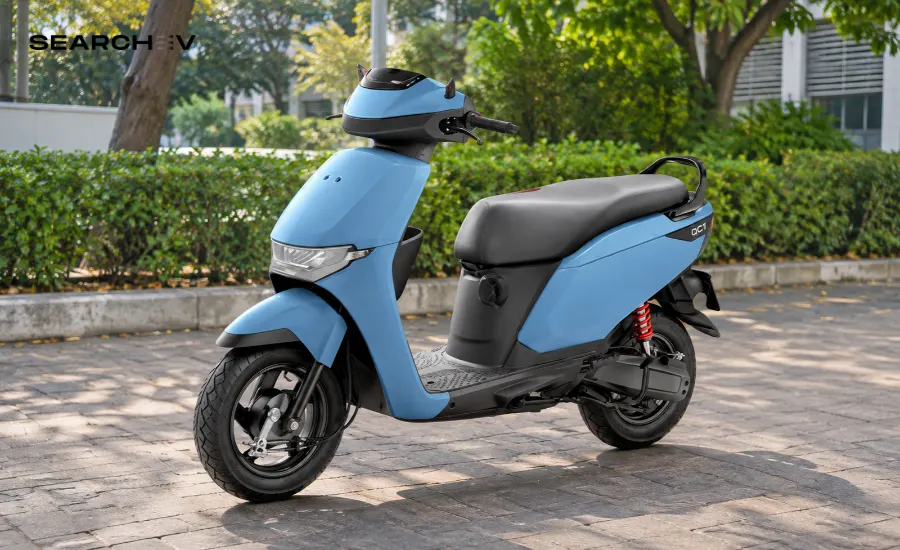
The Honda QC1 is worth considering for students who want a relatively straightforward electric scooter for everyday city travel. It has a 1.5 kWh fixed battery, an 80 km IDC-certified range and a claimed top speed of 50 km/h.
Its 89.5 kg kerb weight and 704 mm seat height are notable for riders who prefer a lighter scooter and an accessible seat. The QC1 also gets 26 litres of under-seat storage, which can be useful for carrying everyday essentials.
Why students should consider it:
- Relatively low kerb weight
- Low seat height
- Practical storage space
- Simple city-focused performance
Things to consider: The battery is fixed, so it cannot be carried indoors for charging. Its certified range is best suited to shorter daily routes rather than frequent long-distance travel.
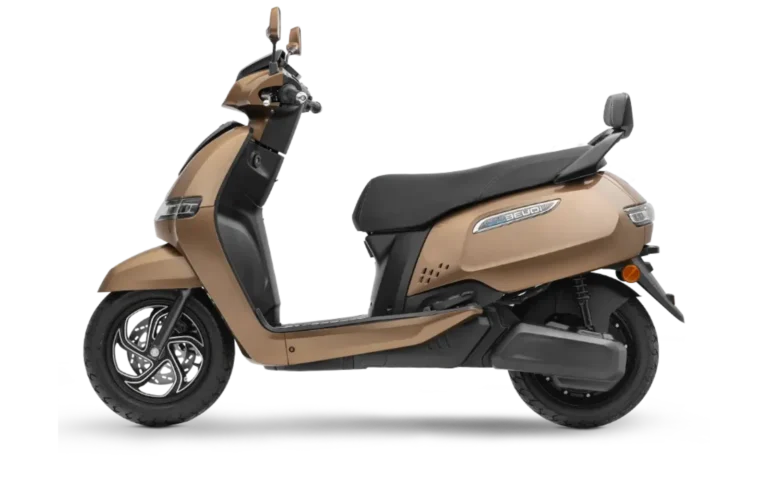
2. TVS iQube – A Practical Everyday College Scooter
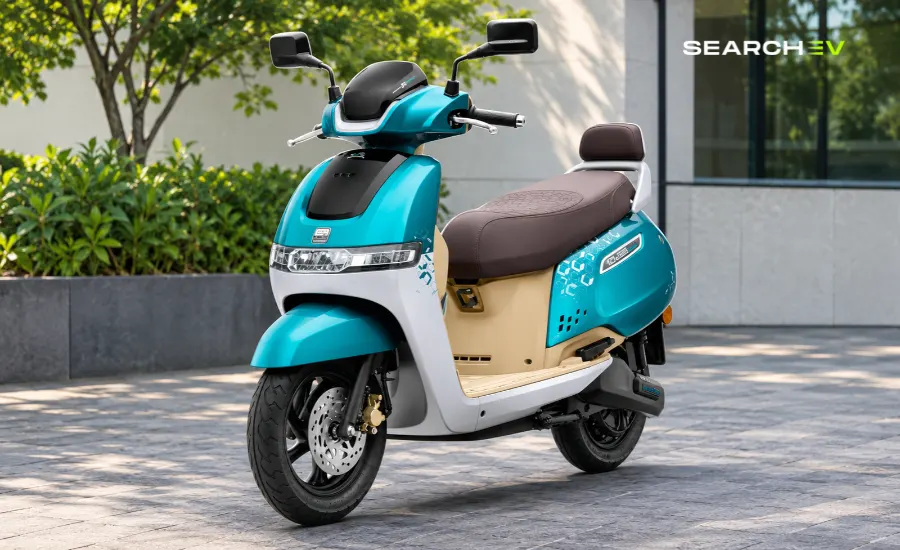
The TVS iQube is a sensible option for students who want a familiar family-scooter layout and a practical daily commuter. The entry 2.3 kWh version has an IDC range of 114 km and a top speed of 68 km/h.
The scooter has a 770 mm seat height and a kerb weight of 109 kg in this variant. It also offers reverse and forward parking assistance, which can help when moving the scooter in a tight parking space.
Why students should consider it:
- Practical everyday scooter design
- Established dealer and service network
- Parking assistance
- A useful balance of range and performance
Things to consider: The battery is fixed, so students living in hostels or buildings without convenient charging access should check the parking and charging arrangements first.
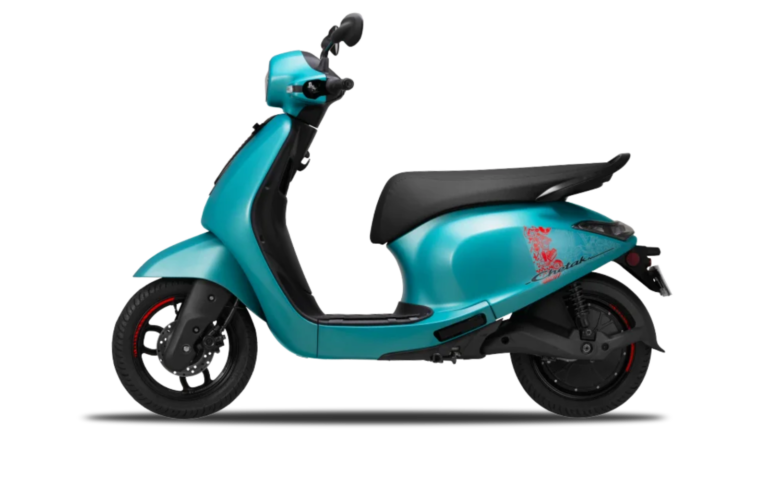
3. Bajaj Chetak C2501 – A City-Friendly Scooter with a Metal Body
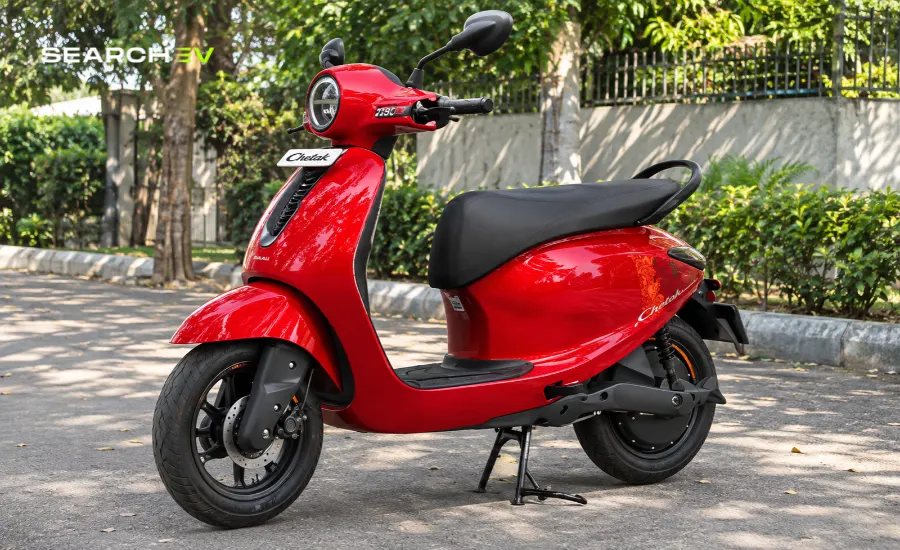
The Bajaj Chetak C2501 is an option for students who prefer a compact, traditional scooter design. It gets a 2.5 kWh battery, a claimed IDC range of 113 km and a top speed of 60 km/h.
The C2501 has a listed seat height of 763 mm. Its design and feature package are focused on everyday commuting rather than high-speed performance.
Why students should consider it:
- Familiar scooter proportions
- 763 mm seat height
- Suitable performance for regular city commutes
- A straightforward alternative to more feature-heavy scooters
Things to consider: Check the exact variant and available features before booking. The C2501’s app connectivity and equipment differ from higher Chetak variants.
4. Hero Vida VX2 – Useful for Students Who Need Flexible Charging
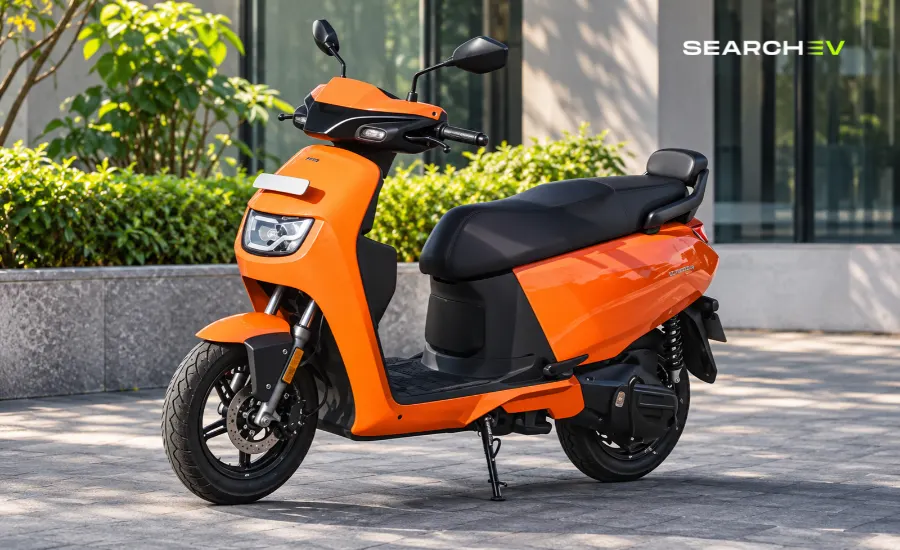
The Hero Vida VX2 deserves attention from students who cannot conveniently charge a scooter in their parking area. Selected VX2 variants use removable batteries, allowing the battery packs to be taken indoors for charging, subject to the model’s charging instructions and building rules.
The VX2 range has multiple battery and equipment configurations, so students should compare the exact variant rather than relying on a single range or price figure for the entire series.
Why students should consider it:
- Removable battery convenience on applicable variants
- Multiple configurations to suit different budgets
- Practical everyday scooter format
- Useful when a fixed charging point is difficult to access
Things to consider: Confirm the battery configuration, claimed range, charging time and price of the exact VX2 variant. Removable batteries are helpful only if you have a safe and convenient place to charge them.
5. Ather Rizta – Best for Students Who Also Need Family Practicality
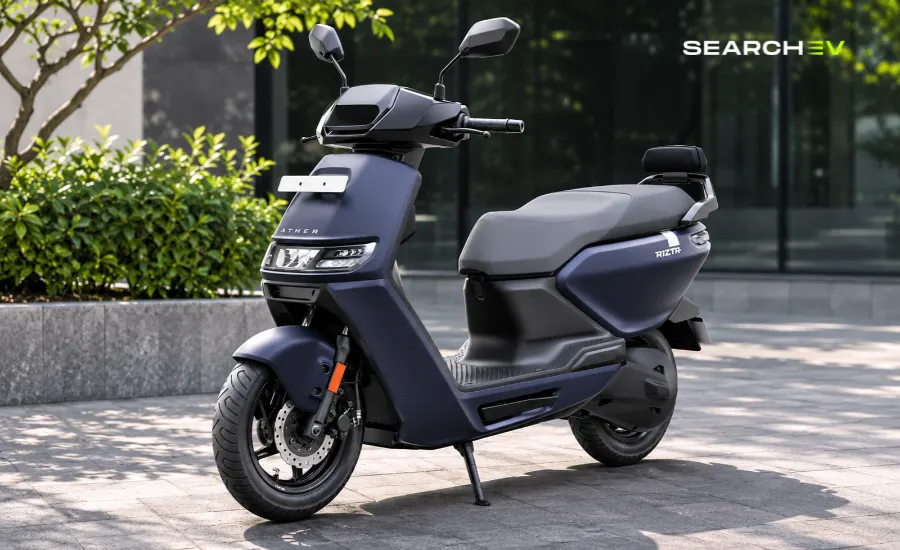
The Ather Rizta is a more family-oriented choice. Its wide seat, generous storage and comfortable riding position make it suitable for students who regularly carry a pillion or share the scooter with family members.
Depending on the variant, the Rizta offers a 2.7 kWh, 2.9 kWh or 3.5 kWh battery configuration. Ather lists an IDC range of up to 161 km, a top speed of 80 km/h and 34 litres of under-seat storage.
Why students should consider it:
- Spacious seat for rider and pillion
- Generous under-seat storage
- Multiple battery options
- Useful for both college commuting and family errands
Things to consider: It is larger and heavier than some entry-level options. Students should test its handling and check whether its price fits their budget.
Quick Comparison: Electric Scooters for Students
| Model | Battery | Claimed IDC range | Top speed | Best suited for |
| Honda QC1 | 1.5 kWh | 80 km | 50 km/h | Short commutes and lighter handling |
| TVS iQube 2.3 kWh | 2.3 kWh | 114 km | 68 km/h | Everyday college commuting |
| Bajaj Chetak C2501 | 2.5 kWh | 113 km | 60 km/h | Traditional scooter design |
| Hero Vida VX2 | Variant-dependent | Variant-dependent | Variant-dependent | Flexible charging on removable-battery variants |
| Ather Rizta | 2.7–3.5 kWh | Up to 161 km | 80 km/h | Storage and family use |
Figures are manufacturer-claimed or certified figures for the specified variants. Prices, specifications and availability can change. Check the exact variant and latest quotation with the manufacturer or dealer before booking.
Can Students Under 18 Ride Electric Scooters?
This is an important point for school students and younger college students.
Not every electric scooter can be ridden without a driving licence. Under Indian motor vehicle rules, only qualifying low-speed electric two-wheelers that meet the applicable technical and certification requirements are exempt from the usual registration and driving-licence requirements.
A regular electric scooter capable of speeds above the prescribed low-speed limit requires the appropriate driving licence, registration and insurance. Do not assume that a scooter is licence-free simply because a seller advertises it as a low-speed model.
Students and parents should verify the vehicle’s certification, rated motor power, maximum speed and legal classification before purchase. Age and licence eligibility should also be checked before the vehicle is used on public roads.
How Much Does It Cost to Run an Electric Scooter?
One of the biggest advantages of an electric scooter is its relatively low energy cost.
For example, assume a student travels 25 km per day and the scooter consumes 3 kWh for every 100 km. At an illustrative electricity tariff of ₹8 per unit:
- Daily energy use: 0.75 kWh
- Approximate daily charging cost: ₹6
- Approximate monthly cost for 26 riding days: ₹156
This is only an illustration. Actual consumption and electricity tariffs vary by scooter, riding conditions and location. Charging losses can also increase the amount of electricity drawn from the socket.
You can estimate your own expenses using the electric vehicle comparison tool on SearchEV.
Important Things to Check Before Buying
Before choosing a scooter, students should go through these points:
- Daily distance: Calculate the full round trip, including additional stops.
- Charging access: Confirm whether you can charge at home, in a hostel or at your apartment.
- Total cost: Compare the on-road price rather than only the advertised ex-showroom price.
- Battery warranty: Check the warranty period, kilometre limit and exclusions.
- Service centre: Find the nearest authorised service centre.
- Riding comfort: Take a test ride and check seat height, weight and braking.
- Safety equipment: Check the tyres, brakes, lights and overall vehicle condition.
- Legal requirements: Confirm licence, registration and insurance requirements for the specific model.
Final Verdict: Which Electric Scooter Should a Student Buy?
The right choice depends on the student’s budget, commute and charging arrangements.
- Honda QC1: Worth considering for shorter city commutes and riders who prefer a lighter scooter.
- TVS iQube: A practical all-round option for everyday college travel.
- Bajaj Chetak C2501: Suitable for students who prefer a traditional scooter design.
- Hero Vida VX2: A useful option when removable batteries make charging easier.
- Ather Rizta: Better suited to students who also need generous storage and family-friendly practicality.
There is no single electric scooter that will suit every student. A student travelling a short distance to a nearby college may not need a large battery, while someone commuting across a city every day should prioritise range, charging convenience and service support.
Compare the available electric scooters on SearchEV and use the electric scooter buying guide to narrow down your options before making a decision.