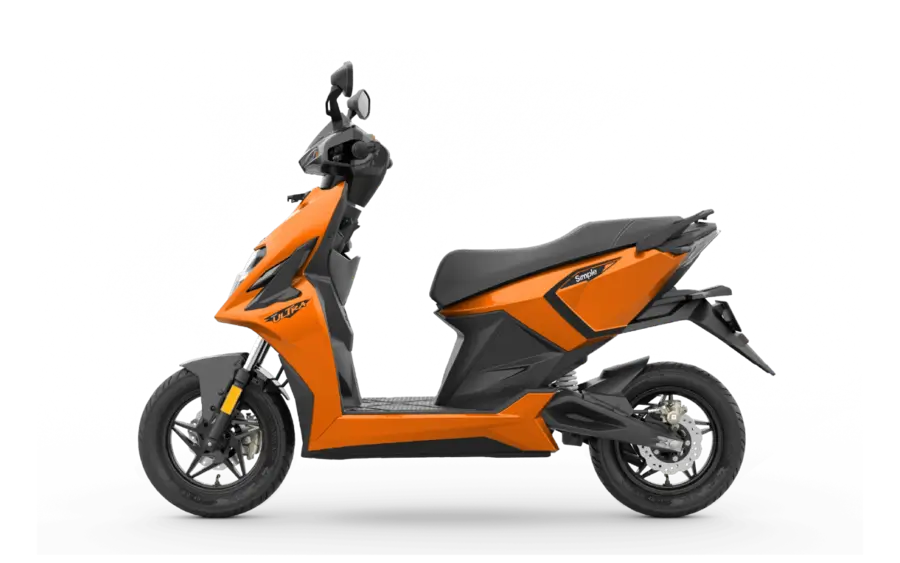
Simple Energy Ultra Expert Review
- Electric
- Scooter
- 2 Seater
What's good
-
Massive 400km range
-
Loaded with modern features
-
Top speed of 115kmph
-
Has a lot of riding aids.
What's not so good
-
Priced on the higher side
-
The bigger battery compromises the boot space
-
No ABS (Anti-lock Braking System)
The Simple Ultra is the brand’s flagship scooter, with over 400km of range. It is built on the same platform as the Simple One Gen 2 but comes with a larger, heavier battery pack. Just like other Simple scooters, the Ultra is also packed with all the bells and whistles.
What's good
-
Massive 400km range
-
Loaded with modern features
-
Top speed of 115kmph
-
Has a lot of riding aids.
What's not so good
-
Priced on the higher side
-
The bigger battery compromises the boot space
-
No ABS (Anti-lock Braking System)
The Simple Ultra is the brand’s flagship scooter, with over 400km of range. It is built on the same platform as the Simple One Gen 2 but comes with a larger, heavier battery pack. Just like other Simple scooters, the Ultra is also packed with all the bells and whistles.
Simple Energy Ultra Expert Review
SEV Score

Samarth Kudale
Tested and reviewed by SEV Experts on 8 parameters
SEV Score

Samarth Kudale
Tested and reviewed by SEV Experts on 8 parameters
Expert Verdict
The Simple Ultra is a rather interesting electric scooter. While most manufacturers are trying to balance between performance, range, and affordability, Simple Energy has taken a slightly different approach. It focuses almost entirely on performance. Range is more than enough, and your pillion will be more than happy on the scooter, thanks to the pliant suspension.
But there are a few compromises. The Ultra is heavier, loses out on some underseat storage, and costs almost Rs 2.5 lakh. The absence of ABS is also something we find difficult to digest, especially considering the 115 kmph top speed.
Simple Energy Ultra Design
Design And Colour Schemes
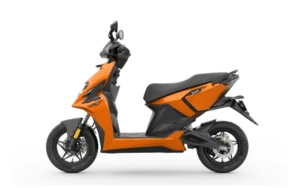
The Simple Ultra looks quite similar to the Simple One Gen 2, with sharp body panels, angular styling, and an overall sporty appearance. In fact, unless you pay close attention, you might struggle to distinguish between the two.
Its design has aged quite well since it first came out. The sharp front apron, compact headlamp, and aggressively styled side panels give it a distinctive look. It looks more like miniature space ship with two wheels than a sporty electric scooter.
The Ultra is available in an exclusive Orange colour scheme, which complements its design rather nicely. However, considering its flagship positioning, we think Simple Energy could have offered a few more colour options to choose from.
What makes the Ultra particularly interesting is that, despite carrying a considerably larger battery pack, the overall dimensions are largely unchanged. Simple has managed to accommodate the additional battery without making the scooter look unnecessarily bulky.
Build Quality
The Ultra is built on the same platform as the Simple One Gen 2, sharing its overall construction and bodywork design. The body panels are neatly integrated into the scooter’s styling, while the relatively compact dimensions help preserve its sporty proportions.
However, at this price point, expectations are considerably higher. The quality of the plastics, switchgear, and long-term durability are particularly important, especially considering the competition from more established manufacturers. Also, the location of the switches is what I think could be improved.
And it does fare well when build quality is considered. We think the design is one of the Ultra’s stronger selling points, but the overall fit and finish also justifies its premium pricing.
Simple Energy Ultra Features
The Simple Ultra is loaded with features, and this is one area where Simple has certainly not held back. It comes equipped with a 7-inch TFT touchscreen instrument cluster with smartphone connectivity, navigation, music controls, call notifications, and over-the-air software updates. And it is quite well laid out. All the necessary information is easily visible, but only under direct, perpendicular sunlight does the display lose out.
Apart from this, the scooter also gets cruise control, hill-hold assistance, traction control, multiple regenerative braking levels, and several other rider assistance features. The Ultra comes with six riding modes: Eco X, Eco, Ride, Air, Sonic, and Sonic X. Each mode changes the available performance, allowing riders to manipulate the power output and delivery depending on their requirements.
The scooter also offers four levels of regenerative braking, which should allow riders to adjust how aggressively the electric scooter slows down when they release the throttle. We, personally think the traction control and regenerative braking adjustments are much more useful than some of the connected features in the suite.
Don’t get us wrong, navigation and ride data are certainly useful. But we don’t particularly see the appeal of having call notifications and music controls on a scooter when you’re supposed to be concentrating on the road.
What we appreciate more is that Simple has also included features such as geofencing, theft and tow alerts, live location sharing, and fall detection. These are functionalities that can genuinely improve the ownership experience rather than simply adding another feature to the specsheet. Overall, the Ultra has a rather comprehensive equipment suite. But, at nearly Rs 2.5 lakh, we think it definitely should.
Simple Energy Ultra Performance & Range
Motor and Performance
The Simple Ultra uses a mid-mounted PMSM electric motor that produces 8.8 kW of peak power and 72 Nm of torque. The motor has a distinct whine while running and is quite capable. Twist the throttle, and the Ultra lunges forward with relative ease. The power delivery is linear at the start, and then the punch arrives after 20 kmph, after which our test scooter reached an impressive 115 kmph.
These are rather impressive figures for an electric scooter, especially one carrying a battery pack as large as the Ultra’s. The six riding modes offer different levels of performance. Eco X and Eco prioritise efficiency, while Ride and Air offer progressively higher speeds. Sonic and Sonic X unlock the scooter’s frantic performance. After testing it for nearly 400 km, we can confidently say that the scooter’s performance has exceeded our expectations. However, a scooter capable of these speeds also needs to have the chassis, suspension, and braking equipment to match.
Battery Specifications
The Ultra’s biggest highlight is undoubtedly its battery pack. It uses a dual-battery arrangement with a combined capacity of 6.5 kWh. This includes a 5 kWh primary battery and an additional 1.5 kWh battery positioned underneath the seat.
Both batteries are fixed, so you cannot simply remove them and charge them inside your house, which does take away some of its convenience. This arrangement also increases the scooter’s weight and eats into the available underseat storage space.
Claimed Range Vs Real-World Range
Simple Energy claims an IDC range of 400 km for the Ultra, making it one of the longest-range electric scooters currently available in India. That’s an impressive number, especially considering that several electric motorcycles struggle to offer even half of that range. However, in our range test, the Simple Ultra returned a true range of around 200 km when ridden in a combination of all modes, just like how a buyer would in their daily commutes.
Simple Ultra Range Figures
| Parameter | Range |
| Claimed IDC Range | 400 km |
| SearchEV True Range | 200 km |
| Difference | 200 km |
| True Range Percentage | 50% |
That’s a difference of 200 km, which might seem rather disappointing at first. However, there’s another way of looking at it. Even with a real-world figure of approximately 200 km, the Ultra has enough juice to comfortably handle several days of commuting without needing a recharge.
For example, someone travelling 25-30 km daily could potentially cover an entire working week and still have a reasonable amount of charge left. And this is where the Ultra starts making sense. The real-world range might not be anywhere close to the advertised 400 km, but 200 km is still a substantial figure for an electric scooter.
However, it’s important to remember that these figures will vary depending on riding modes, traffic conditions, rider weight, and average speed. Constantly riding in Sonic X mode or maintaining higher speeds will consume considerably more energy than relaxed commuting in Eco mode. We think the Ultra’s range is one of its biggest strengths, even after accounting for the difference between claimed and real-world figures.
Simple Energy Ultra Ride & Handling
Underpinnings
The Simple Ultra uses a tubular chassis with a telescopic front fork and a rear monoshock. It rides on 12-inch alloy wheels with 90/90-section tubeless tyres at both ends. The scooter also gets 172 mm of ground clearance, a 1,347 mm wheelbase, and a kerb weight of 139 kg. The underpinnings are largely shared with the Simple One Gen 2, although the larger battery pack makes the Ultra noticeably heavier, but only on paper.
Ride Quality
The Ultra’s suspension setup has to manage a rather interesting combination of relatively compact dimensions and a substantially larger battery pack. The telescopic front fork and rear monoshock are conventional choices for a sporty electric scooter, but the additional weight makes suspension tuning particularly important.
On smoother roads, this configuration is well suited to the intended performance. Even though the suspension handles minor bumps and creases on the road easily, for sharp potholes, broken surfaces, and speed bumps, you’ll have to slow down noticeably.
With a pillion, the suspension works beautifully. It gets comfortable to the point where we think it is synonymous with a plush feeling. Even if you ride solo, it doesn’t ever get jarring, but just a little firm.
Handling
At 139 kg, the Simple Ultra is quite heavier than several other performance-orientated electric scooters. However, the compact wheelbase and 12-inch wheels should help keep it manageable through congested city traffic. The greater concern here was how the additional weight affects changes in direction and low-speed manoeuvrability compared to the lighter Simple One. But, we are glad to say, it handles quite well. It does carry the weight but feels very manageable.
Also, when we put the Simple Ultra through a series of spirited riding outbursts, it held its end pretty well. It feels confident and stable and returns good feedback on what’s happening underneath.
Braking Performance
The Simple Ultra gets disc brakes at both ends, with a 200 mm front disc and a 190 mm rear disc. It also comes with a Combined Braking System (CBS). And, this is the only weakest link in the scooter. Even though the bite is good, feedback is what they lack. The stopping power is there, but how it is delivered is a little eerie. You will have very little idea about when the wheel will lock up under hard braking, especially the rear wheel, considering the fact that we ride in India. And the lack of ABS is exceedingly felt here.
Now, this is something I find particularly disappointing. We’re talking about an electric scooter that accelerates from 0 to 40 kmph in under three seconds and reaches a top speed of 115 kmph. At this performance level, I think even a single-channel ABS system should have been standard. CBS can distribute braking force between the wheels, but it cannot independently prevent wheel lock-up like ABS.
Simple Energy Ultra Safety
Simple Ultra is equipped with several electronic rider aids. It gets multi-level traction control, hill-hold assistance, regenerative braking adjustments, and emergency braking lights. It also offers fall detection, theft and tow alerts, geofencing, and live location tracking through the connected application.
The traction control system is particularly interesting. It can help manage excessive rear-wheel slip under acceleration, which is quite useful considering the motor’s output. Similarly, the regenerative braking system allows riders to adjust the amount of deceleration when they release the throttle. However, these systems shouldn’t be confused with ABS. Traction control primarily manages wheel slip while accelerating, whereas ABS helps prevent wheel lock-up during braking. We think Simple has done a reasonably good job with the electronic safety features, but the absence of ABS remains a significant omission. In fact, if an option was given to trade a few connected features for a proper ABS setup, we would do it happily.
Simple Energy Ultra Space & Comfort
Riding Ergonomics
The Simple Ultra gets a seat height of 780 mm, which is relatively accessible for most riders. Our test rider, who stands 6 feet tall, could easily flat-foot on the scooter. Even riders with lower heights can easily The scooter has an upright riding position, a conventional handlebar arrangement, and a flat floorboard. These are practical design choices for everyday commuting, especially in stop-and-go traffic.
However, the 139 kg kerb weight might make it slightly more demanding for shorter riders while moving the scooter around manually. The seat height itself isn’t particularly intimidating, but we would recommend checking how comfortably you can balance and manoeuvre the scooter during a test ride prior purchase.
Seat And Pillion Comfort
The Ultra uses the same basic seating arrangement as the Simple One, with a single-piece seat designed to accommodate two adults. The upright riding posture should work reasonably well for short and medium-distance journeys. However, considering the Ultra’s massive battery capacity and range, longer-distance comfort becomes particularly important.
After all, having the battery capacity to travel 200 km doesn’t necessarily mean you would want to cover that distance without taking a break. We think the seat cushioning, available legroom, and pillion accommodation deserve particular attention if you intend to use the Ultra for longer journeys. The seat is well padded, the legroom is just enough, and the pillion seat is comfortable too.
Storage And Utility
This is one area where Simple has made a rather noticeable compromise. The Ultra gets 26 litres of underseat storage, considerably less than what is available on the Simple One. The reason is straightforward. The additional 1.5 kWh battery occupies space that would otherwise have been available for carrying luggage. Now, 26 litres is still usable for everyday essentials, but it isn’t particularly impressive for a scooter costing nearly Rs 2.5 lakh. You also get a small front storage compartment, which can accommodate smaller belongings.
Simple Energy Ultra Charging & Warranty
Charging Options And Time
The Simple Ultra comes with a 750 W portable home charger, which takes approximately 9 hours to charge the battery from 0 to 80 per cent, and 12 hours for a full charge. The scooter also supports fast charging, which brings the 0–80 percent charging time down to approximately 3-4 hours, depending on the conditions.
Considering the massive 6.5 kWh battery pack, the charging times are understandable. However, the standard home charging setup requires some patience. If you’re planning to regularly use most of the battery’s capacity, you’ll need to make charging part of your overnight routine.
The fast-charging option certainly improves the proposition, particularly for buyers interested in longer journeys. However, we would recommend checking the availability and compatibility of charging stations along your intended routes before relying on public charging.
Warranty
Simple Energy’s published standard warranty information indicates three years or 30,000 km of vehicle coverage, whichever comes earlier. The brand also offers extended protection plans covering the battery and motor. One such package is the Simple Super Protect plan, listed at Rs 8,499 excluding GST.
We would recommend confirming the battery-specific warranty coverage and the exact extended warranty terms with the dealership before purchasing the scooter. Given the size and potential replacement cost of the battery pack, warranty coverage should be an important consideration for buyers.
Simple Energy Ultra Service & Network
Simple Energy has been gradually expanding its sales and service presence across India. The manufacturer currently has more than 60 stores and service centres, although its network remains relatively limited compared to established two-wheeler brands.
This is particularly important for the Ultra because it is a technologically sophisticated product with a large battery pack, connected features, and several electronic rider aids. In case something goes wrong, access to trained technicians and replacement parts becomes crucial.
We think Simple has made considerable progress with its product lineup, but building customer confidence through reliable after-sales support will be just as important. Before purchasing the Ultra, we would recommend checking whether there is an authorised service centre nearby and how easily replacement parts can be sourced.
Who should buy this?
What's good
-
Massive 400km range
-
Loaded with modern features
-
Top speed of 115kmph
-
Has a lot of riding aids.
What's not so good
-
Priced on the higher side
-
The bigger battery compromises the boot space
-
No ABS (Anti-lock Braking System)
Simple Energy Ultra Price
What's good
-
Massive 400km range
-
Loaded with modern features
-
Top speed of 115kmph
-
Has a lot of riding aids.
What's not so good
-
Priced on the higher side
-
The bigger battery compromises the boot space
-
No ABS (Anti-lock Braking System)
Connect Now