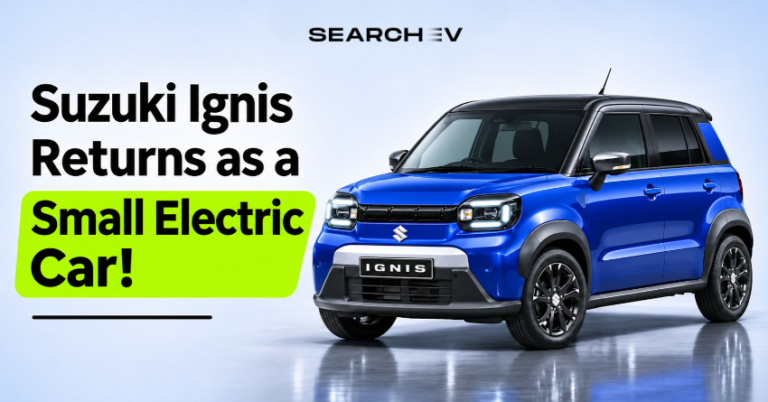
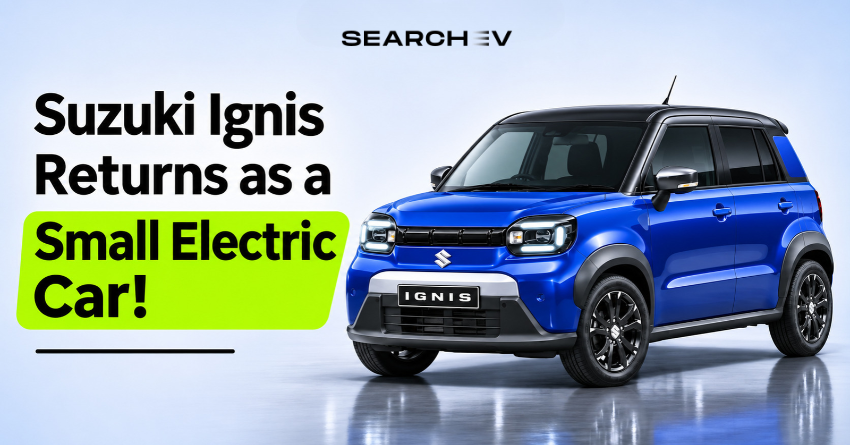
Just months after Maruti Suzuki pulled the plug on the petrol Ignis in India, the familiar nameplate has returned globally in an entirely different avatar. Suzuki just held the online world premiere of the all-new Suzuki Ignis EV, its first compact electric vehicle developed for international markets. Sales are scheduled to begin in Europe and select overseas regions from summer 2027. Weighing just 1,080 kg with a 26 kWh Lithium Iron Phosphate battery and a 90 bhp front electric motor, the born-electric four-seater brings Suzuki’s small car expertise straight into the entry-level EV bracket.
Grown Beyond Kei Car Rules: How the Ignis EV Differs From the eSky
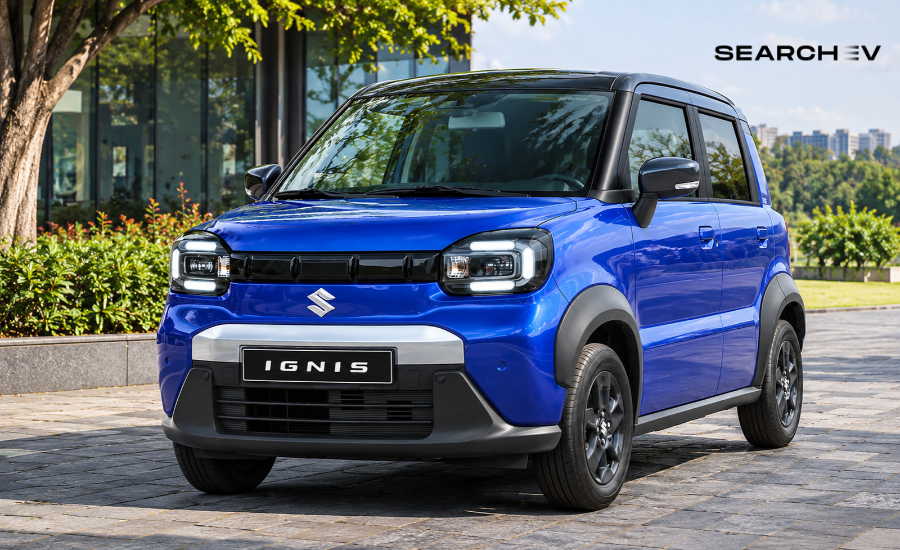
At first glance, the electric Ignis looks closely related to the eSky mini EV that debuted as a concept at the 2025 Japan Mobility Show and went on sale in Japan on November 16, 2026. Underneath the skin, both cars share the dedicated HEARTECT e electric architecture, 2,460 mm wheelbase, and tall silhouette.
Still, this is not a quick badge swap. Suzuki engineers developed the global Ignis EV separately from an early stage to suit faster roads outside Japan, stretching its footprint beyond strict Japanese kei car limits. Compared to the Japanese eSky, the European specification Ignis EV grows in length and width through redesigned bumpers and chunkier wheel arch overfenders, giving it an upright micro crossover stance.
Built at Suzuki’s Kosai plant in Shizuoka Prefecture for export to Europe, the Ignis EV underwent road testing across European streets and is now tasked with fighting new affordable urban EVs.
26 kWh LFP Battery, 90 bhp eAxle, and 50 kW Fast Charging
The mechanical package of the Ignis EV follows Suzuki’s Sho Sho Kei Tan Bi philosophy of keeping vehicles smaller, fewer, and lighter.
Power comes from a compact front-mounted eAxle that integrates the electric motor, inverter, and reduction gears into a single lightweight housing. Front Wheel Drive output stands at 67 kW (90 bhp) and 133 Nm. Feeding that unit is an underfloor 26 kWh Lithium Iron Phosphate (LFP) battery pack that carries a claimed 310 km range per charge.
Charging hardware looks practical for daily city and suburban duty:
- Home AC Charging: Supports up to 7.4 kW AC charging, filling the battery in roughly four hours, while a slower 3.7 kW AC supply takes around eight hours.
- 50 kW DC Fast Charging: Uses a CCS port rated up to 50 kW DC, bringing rapid top-up times to under 30 minutes.
Boxy Styling, Dual Screen Cabin, and a 4.5 Metre Turning Radius
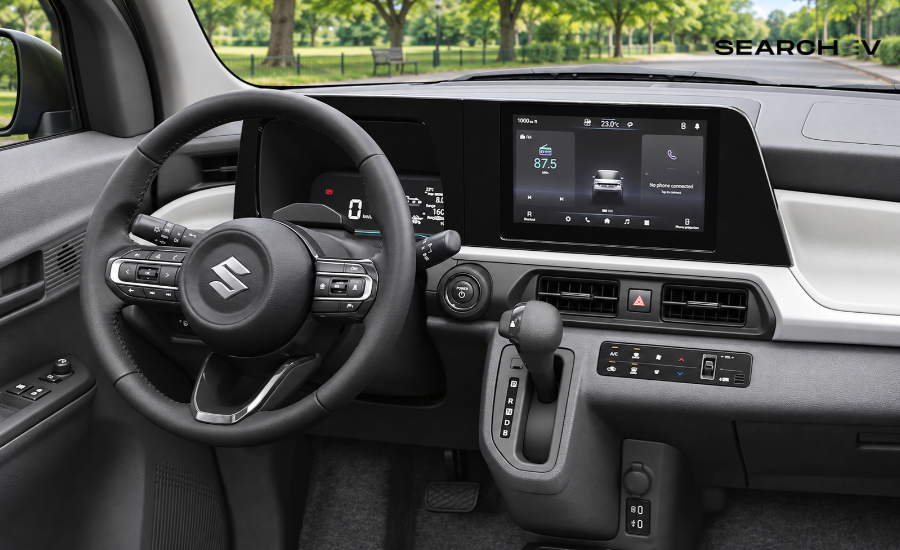
Visually, the electric Ignis drops the quirky raked C pillar of the old petrol car for a cleaner, boxy tall boy shape. A flowing shoulder line, floating roof treatment, and squared wheel arches frame 15-inch wheels.
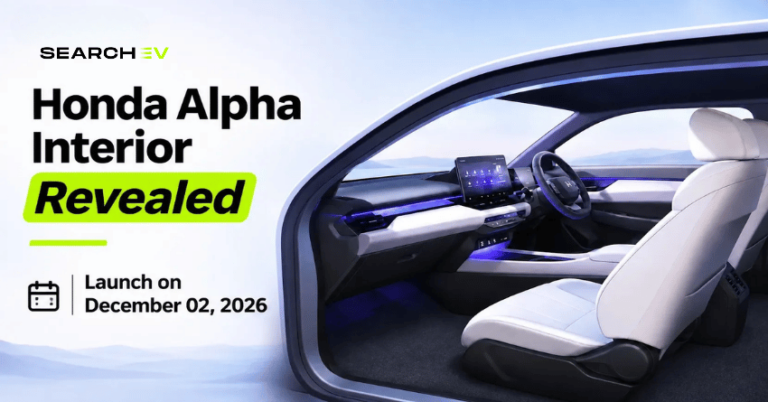
Inside, a rounded trim line wraps continuously from the dashboard into the door cards, topped by a dual-screen panel combining a digital driver display and central touchscreen alongside an open storage tray and multiple cubbies. Physical buttons remain in place for audio volume and climate controls, paired with a conventional automatic-style drive selector. Steering-mounted switches also confirm cruise control and a lane watch camera system on showcased trims.
Urban manoeuvrability is one of its sharpest engineering highlights. With a minimum turning radius of just 4.5 metres, the electric Ignis makes narrow residential lanes and crowded parking bays easy to handle.
Could Maruti Suzuki Bring the Ignis EV to India?
Right now, Suzuki has made zero commitment to launching the Ignis EV in India. The car is being built in Japan for European export first, and importing a small electric hatchback as a fully built unit would push its price far beyond what Indian budget buyers are willing to pay.
Still, the underlying HEARTECT e small car blueprint fits directly into Maruti Suzuki’s broader domestic roadmap. Following the launch of the midsize e Vitara, Maruti Suzuki has long evaluated a localised entry-level electric hatchback previewed earlier by the eWX concept, whose design patent was filed in India in 2024.
Whether the Ignis EV itself ever wears a Maruti Suzuki badge on Indian roads depends entirely on local manufacturing economics, since a Japanese import makes no sense under Rs 10 lakh. Even if this exact European model skips India in favour of a localised small EV later in the decade, the new Ignis EV proves Suzuki now has a sharp 26 kWh, 50 kW fast-charging blueprint capable of putting serious pressure on the Tata Tiago EV and MG Comet EV.