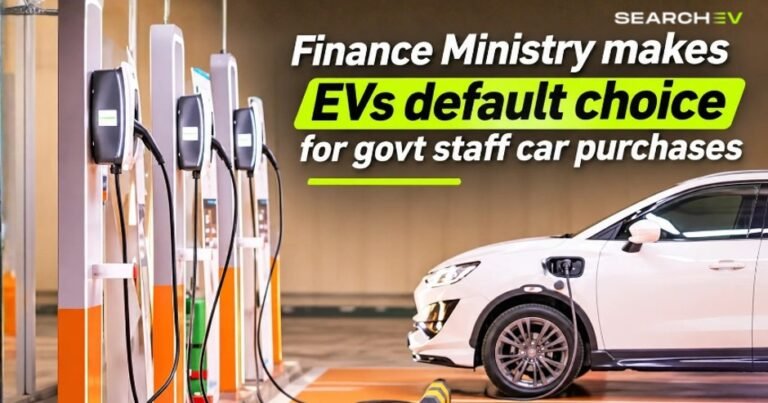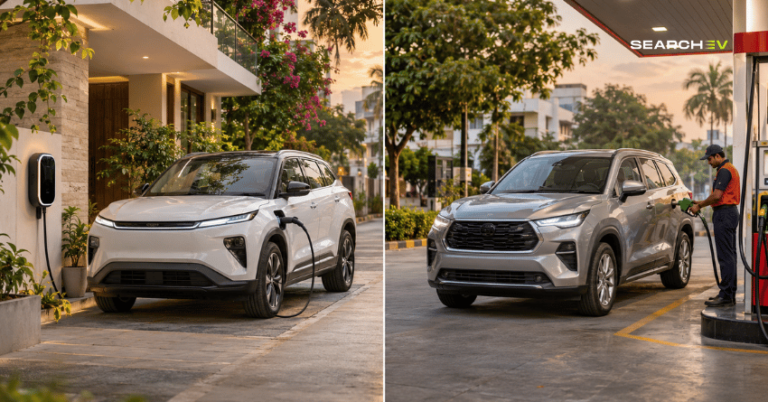
The Union Ministry of Finance has made electric vehicles the default and preferred choice for staff car purchases across all central government ministries and departments. Issued through an Office Memorandum by the Department of Expenditure on November 10, 2026 with immediate effect, the revised guidelines set the Net Dealer Price ceiling for electric staff cars at Rs 20 lakh. That is double the Rs 10 lakh limit allowed for conventional petrol, diesel, and hybrid vehicles. Going forward, central government offices must ordinarily buy electric cars whenever their existing combustion engine staff vehicles come up for condemnation or replacement. The ministry said the revised ceiling reflects prevailing vehicle prices and lifecycle costs, and aims to promote electric mobility and reduce dependence on fossil fuels.
Strict Approval Hurdles for Petrol, Diesel, and Hybrid Cars
Despite appeals from certain automakers for tax and policy parity between strong hybrids and battery electric vehicles, the memorandum groups hybrid cars with petrol and diesel models under the lower Rs 10 lakh cap.
The new rules do not place an absolute ban on buying combustion engine cars. If a ministry or department operates in remote border areas, hilly terrain, or field locations where public charging infrastructure is still patchy, it can apply to buy a petrol, diesel, or hybrid vehicle.
Getting that permission is intentionally difficult. Before a department can buy or even hire a non-electric car, it must send a justified proposal to the Department of Expenditure for case by case relaxation. That file cannot move unless it carries both the formal approval of the Secretary of the concerned Administrative Ministry and the concurrence of its Financial Adviser. The same procedure applies to departments that want to hire a conventional vehicle. The September 1, 2022 instructions requiring departments to hire electric vehicles continue to apply, and purchases remain governed by the General Financial Rules, 2017.
Which Electric Cars Now Qualify for Government Fleets
Raising the electric car cap to Rs 20 lakh Net Dealer Price widens the choice. When Energy Efficiency Services Limited (EESL) began supplying electric cars to government departments in 2017-18, the first models were low-range fleet sedans such as the Mahindra e-Verito and the Tata Tigor EV. Some officials reportedly refused to use them, and a government representative said they averaged only about 80 km per charge in city use.
A department that opts for an EV now has far more options.
- Tata Motors: Beyond the fleet focused Xpres T EV, Tiago EV, and Punch EV, ministries can now procure the Nexon EV, the Curvv EV coupe SUV, and the entry variant of the Sierra EV.
- Mahindra: The sub four meter XUV 3XO EV fits easily within the limit, alongside the entry variant of the born electric BE 6.
- JSW MG Motor: The spacious, rear seat focused MG Windsor EV and base variants of the ZS EV qualify comfortably under the Rs 20 lakh Net Dealer Price ceiling.
- Maruti Suzuki: Lower and mid spec trims of the Maruti Suzuki e Vitara, fall within the new government budget.
- Hyundai, Kia, and VinFast: Entry variants of the Hyundai Creta Electric, the Kia Syros EV, the three row Kia Carens Clavis EV, and VinFast’s locally assembled VF 6, all become viable staff car options.
Note: The memorandum names no models, so eligibility will depend on the price basis used in each purchase.