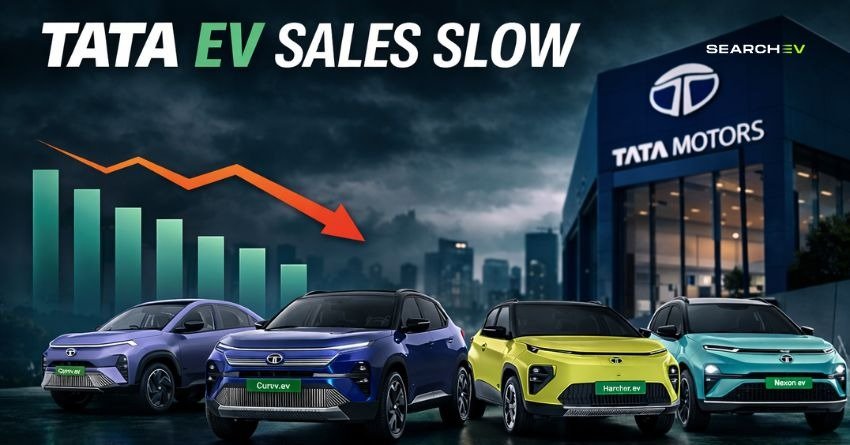
Tata Motors came into 2026 with strong momentum, building on the growth it saw through 2025. January looked especially promising, but the pace didn’t quite hold up in the months that followed. As the latest sales numbers show, there’s been a noticeable dip after that strong start, both compared to January’s performance and the steady growth trend seen last year. When you put the 2025 numbers next to the 2026 (YTD) data, the shift in momentum becomes pretty clear.
2025: A Year of Strong and Consistent Growth
Tata remained India’s leading EV manufacturer in 2025, thanks to consistent monthly volumes from models such as the Nexon EV and Tiago EV. 2025 Monthly Average (Approx.)
- ~6,000–7,500 EV units per month
- Strong festive surges of around 8,000 units.
- Consistent increase over the year
This consistency made 2025 a hallmark year for Tata, which comfortably leads the segment.
2026 Sales Data (Jan–March): Early Spike, Then Softening
In the first three months of 2026, the sales figures were as follows: in January, approximately 7,800 units were sold; in February, around 6,200 units were sold; and in March, about 5,900 units were sold. At first glance, January appeared to continue the growth trend from 2025. However, the decline in sales during February and March indicates that this momentum was not sustained.
Direct Comparison: 2025 vs 2026 (YTD)
When we compare trends:
| Metric | 2025 Trend | 2026 (Jan–Mar) |
| Monthly Average | ~6,500–7,000 units | ~6,600 units |
| Growth Pattern | Gradual increase | Early spike, then decline |
| Peak Months | Festive-driven highs | January peak only |
Key Insight:
Although the average numbers appear similar, the underlying patterns are quite different. In 2025, there was consistent growth, whereas in 2026, demand was front-loaded, leading to a subsequent decline. This indicates that the momentum is slowing down rather than continuing to expand.
What’s Driving the Shift?
There isn’t a single reason behind this change. Instead, multiple factors are likely contributing to the slowdown.
- Timing: Demand timing is one of the most significant factors. A portion of the January rise could be related to overflow demand from late 2025, as well as year-end offers and buying choices being postponed until the new year. This often ends in a brief increase that is difficult to sustain in the coming months.
- Competition: At the same time, the competitive scene in 2026 is far more dynamic than it was a year ago. MG Motor India and Mahindra are gradually expanding their EV offerings. Buyers are no longer confined to Tata as their default option, with more options available at similar price points.
- The product: There’s also the problem of freshness. Tata’s current EV lineup is successful, although it is no longer new. Consumers are starting to expect a wider choice, updated features, and a more modern look as the market advances. This could cause some consumers to postpone purchases in anticipation of future models.
A Market That Is Maturing
The electric vehicle market is continually evolving. In 2025, the segment experienced significant growth, fueled by early adopters and first-time EV customers. By 2026, that initial wave of growth had passed, and the market began to transition into a more mature and competitive landscape. Growth naturally slows during this phase. Demand grows more predictable, and leadership positions become harder to maintain without continuous innovation.
What This Means for Tata Motors
Tata Motors believes that the current slowdown is a phase shift rather than a fall. The company remains one of the top sellers of electric cars in India, with excellent sales volume relative to industry standards. However, records reveal that the growth rate has decreased. Tata Motors must focus on more than simply consistency in order to maintain its leadership position. Key initiatives such as product revisions, new launches, and enhanced market positioning will be important in the coming months.
The Road Ahead
Tata’s performance in the second half of 2026 will largely depend on its ability to adapt to changing market conditions. Innovative models, updated products, renovated facilities, or holiday seasons could all help the company regain lost momentum. Currently, the comparison between 2025 and 2026 (YTD) clearly shows a shift.
Tata is no longer following a stable growth trajectory; instead, it operates in a more competitive and dynamic EV environment, where sustaining growth is more challenging. This makes this phase particularly interesting: the story is no longer about early successes but about Tata’s capacity to adapt and stay ahead as the electric vehicle market matures.