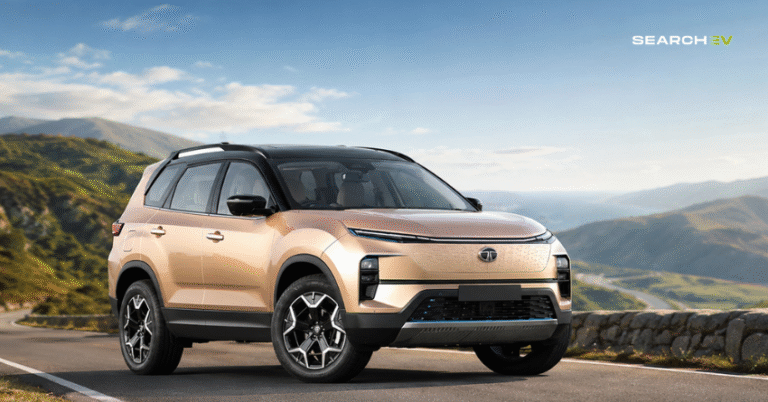
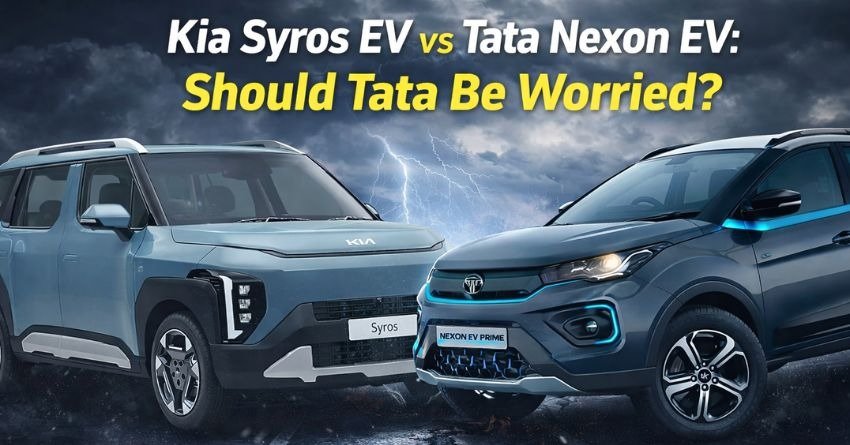
Tata Nexon EV is one of the first mass-market electric cars to achieve mainstream success and widespread adoption in India. Kia is planning to rival the segment leader soon by launching the electric version of the Sorento. Will the Kia Syros EV put a dent in the leader’s sales? Should Tata be worried about the upcoming electric subcompact SUV? Let’s find out.
Kia Syros EV vs Tata Nexon EV: Performance Comparison
While the Tata Nexon EV specs are out there, we can speculate from the reports that the Kia Syros EV will be offered with an electric drivetrain powerful enough to rival the Nexon EV easily. Let’s take a look at the key spec comparison:
| Specifications | Kia Syros EV (Expected) | Tata Nexon EV |
| Battery pack | 42-51kWh | 30kWh |
| Range | 400-450kms | 350kms |
| Power | 130PS | 144PS |
| Charging time (10-100%) | ~ 6 hours (7.2kW charger) | 4.2 hours (7.2kW charger) |
| Fast charging (10-80%) | <60 mins (50kW charger) | 56 mins (50kW charger) |
Kia Syros EV is expected to feature a bigger battery pack than the Tata Nexon EV, which means a longer range on the road. It will also mean that the charging time will be slightly higher than that of the Nexon EV. Performance specifications are expected to be somewhat similar, with the Nexon EV providing slightly higher power and torque.

Features and Safety Comparison
Interior & Tech Features
The Syros EV is expected to lean heavily into a “luxury-first” approach with several segment-first comfort features that the Nexon EV currently lacks.
- Rear Seat Comfort: The Syros features sliding and reclining rear seats with ventilation (seat squab only). We can expect the same with the Syros EV. The Nexon EV offers a fixed rear bench without ventilation.
- Panoramic Display: The Syros uses a massive 30-inch “Trinity” panel that integrates two 12.3-inch screens (infotainment and driver cluster). You can surely expect the same with the EV version. The Nexon EV features a high-quality 12.3-inch touchscreen but uses a separate 10.25-inch digital instrument cluster.
- Sound System: Kia is expected to opt for an 8-speaker Harman Kardon system for the Syros EV, while Tata uses a 9-speaker JBL setup with a subwoofer.
- Sunroof: Both offer panoramic sunroofs, though the Syros EV’s “Dual Pane” design is intended to feel more expansive in its taller cabin.
Safety & Driver Assistance (ADAS)
Kia Syros has recently scored a 5-star rating at the Bharat NCAP, and since the EV will be featured on the same platform, we can surely expect the same rating for it. The Tata Nexon EV scored a 5-star rating at the Global NCAP. Both the subcompact SUVs are safe to choose.
- ADAS: The Syros EV is expected to come with Level 2 ADAS (16 features), including adaptive cruise control and lane-keep assist. The Nexon EV recently added an ADAS suite, but it is generally considered less comprehensive than Kia’s radar-based system.
- Visibility: Both feature 360-degree cameras, but the Syros includes a Blind View Monitor (which shows a camera feed of your blind spot in the instrument cluster when signalling), a signature Kia feature. This feature will surely be offered in the Kia Syros EV.
- Parking: The Syros EV is expected to offer six parking sensors (including side sensors), whereas the Nexon EV typically utilises front and rear sensors.
Practicality & Space
- Boot Space: The Syros EV will offer a significantly larger boot at 465 litres (with the rear seats slid forward), compared to the Nexon EV’s 350 litres.
- Cabin Height: Due to its “tallboy” design, the Syros EV will provide more headroom and a more upright seating position, which may be preferable for taller passengers or elderly users.
Should Tata Nexon EV Be Worried About The Kia Syros EV?
Tata Nexon EV has been leading the subcompact electric SUV space for a very long time, thanks to its good performance, safety, and a proven platform. While the Kia Syros has not been able to make a huge dent in the space, we can expect the Syros EV to make some dent in the sales of the Nexon EV. Should Tata be worried?
Definitely, Tata in general should be worried, as the company has remained a leader for a long time, but there were a few competitors earlier. With more and more options for the customers, Tata will have to cope with the ever-changing demands of the Indian customers, or else, new entrants, like the Kia Syros EV, can surely pose a threat.