Simple Wave Expert Review
- Electric
- Scooter
- 2 Seater
What's good
-
Family-friendly design is quite likeable
-
70 litres of combined storage makes it quite practical
-
Packed with more than enough essential features
-
The price tag is quite affordable
-
Its motor puts out 6.5 kW of peak power, which is more than many sporty scooters
What's not so good
-
Real-world range remains a mystery until we test it
-
Charging takes longer, which is a hurdle if you need a quick refill to head out
-
The rear brake is a drum unit which feels a bit outdated
-
Traction control is only available in higher variants
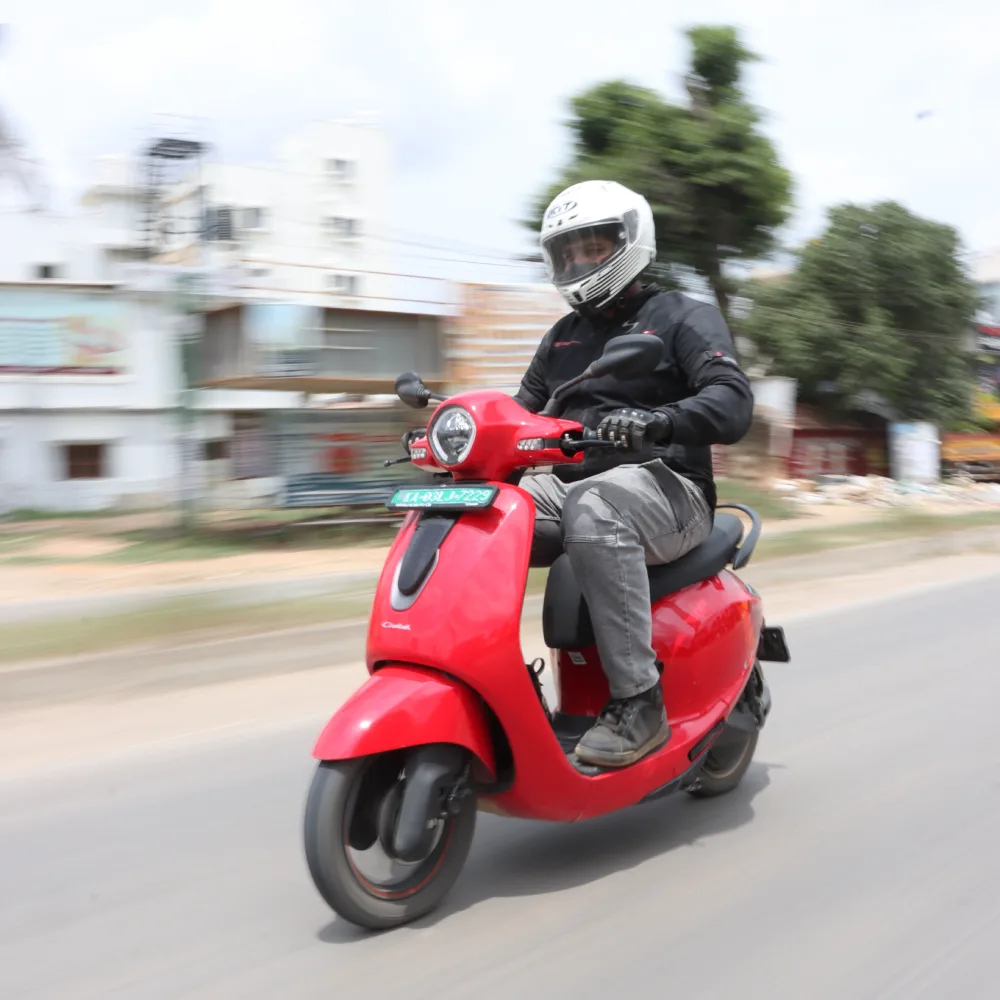
The Simple Wave is the brand’s first family-focused electric scooter, with the brand diverging from its compact, sporty electric scooter lineup, which spawned the Simple One, Simple OneS, and the Simple Ultra. What is the most interesting fact about the Wave is that it comes with a combined storage space of around 70 litres, the largest on a scooter – electric as well as ICE. Its main rival is the new Ather Konarc
What's good
-
Family-friendly design is quite likeable
-
70 litres of combined storage makes it quite practical
-
Packed with more than enough essential features
-
The price tag is quite affordable
-
Its motor puts out 6.5 kW of peak power, which is more than many sporty scooters
What's not so good
-
Real-world range remains a mystery until we test it
-
Charging takes longer, which is a hurdle if you need a quick refill to head out
-
The rear brake is a drum unit which feels a bit outdated
-
Traction control is only available in higher variants
The Simple Wave is the brand’s first family-focused electric scooter, with the brand diverging from its compact, sporty electric scooter lineup, which spawned the Simple One, Simple OneS, and the Simple Ultra. What is the most interesting fact about the Wave is that it comes with a combined storage space of around 70 litres, the largest on a scooter – electric as well as ICE. Its main rival is the new Ather Konarc
Simple Wave Expert Review
SEV Score

Samarth Kudale
Tested and reviewed by SEV Experts on 8 parameters
SEV Score

Samarth Kudale
Tested and reviewed by SEV Experts on 8 parameters
Expert Verdict
The new Simple Wave is arguably the most sensible scooter Simple Energy has built to date. That sounds slightly strange considering the brand’s reputation for fast, compact, and sporty electric scooters which were quite performance-orientated. But that is precisely why the Wave works.
There is a long seat, a spacious floorboard, plenty of storage (up to 70 litres), multiple battery choices and enough performance to give you goosebumps that is considerably quicker than the average family scooter in India, despite looking like something designed primarily for short grocery runs.
The biggest question mark in all of this is its real-world range. Simple claims an IDC figure of 243 km, which is honestly impressive, but until we test the scooter independently, that number remains exactly what it is – a claimed figure.
The other major concern I have is the price of the top-spec Simple Wave+. At Rs 1.89 lakh ex-showroom, you are getting into the territory of several established electric scooters, which start making a strong case. But for someone who wants a scooter with unusually large storage, good performance and a broad choice of battery sizes, the Wave makes for a convincing proposition. It isn’t the scooter that makes you want to go fast. It is the scooter that makes you wonder how much stuff you can fit under the seat.
Simple Wave Design
Simple Wave Design
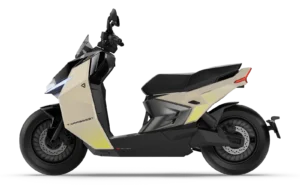
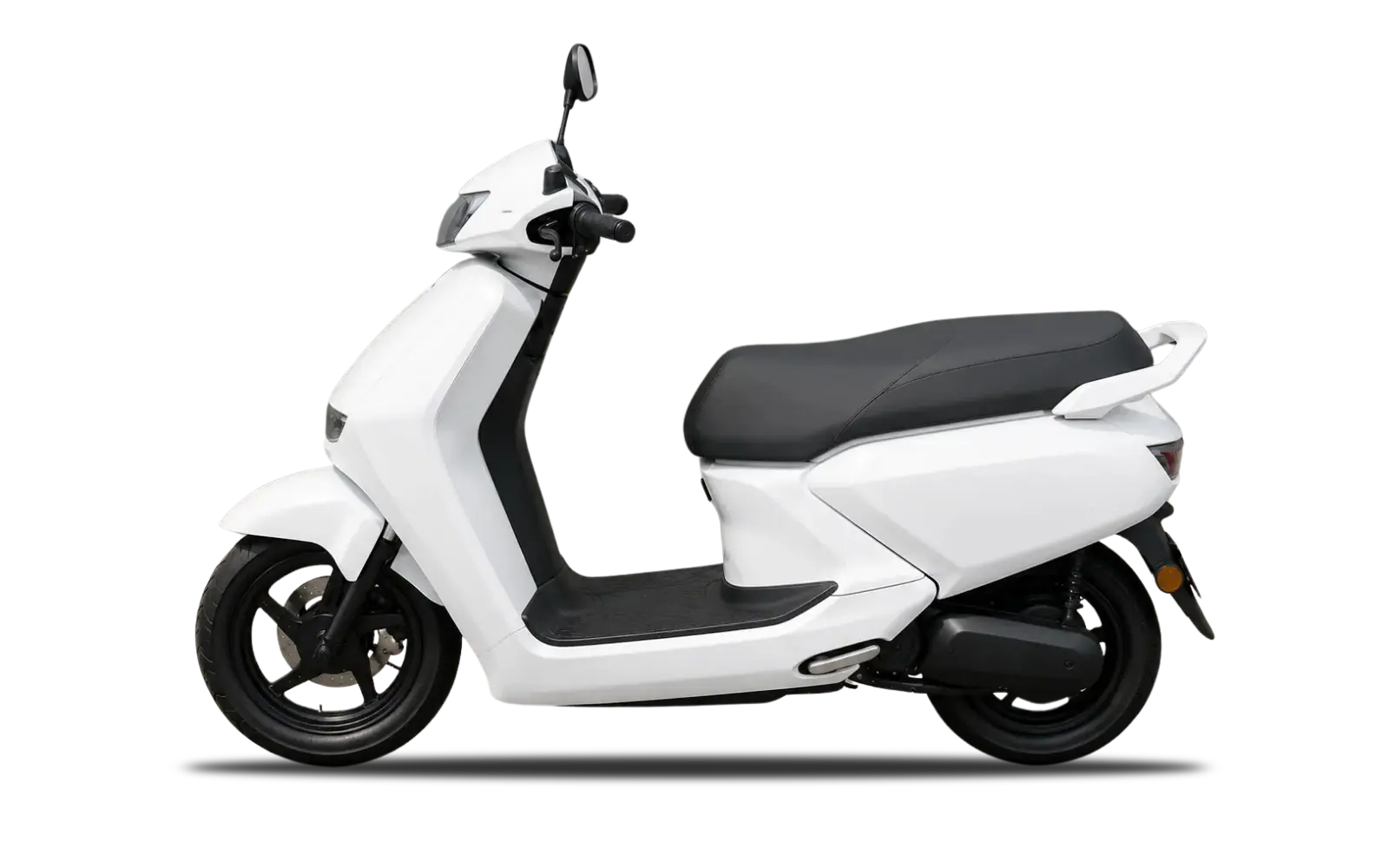
Simple Energy has moved away from the sharp, sporty persona, which we saw on its other scooters, like the Simple One and Ultra. The Simple Wave gets a more neutral, family-friendly silhouette, with a broad front apron and a large seat. Its proportions immediately tell you what this scooter is supposed to do. I even think it has an uncanny resemblance to ‘Toothless’ from How To Train Your Dragon, with that broad DRL, which I think actually looks cute. And this quirk is definitely working in its favour.
The design should also age better than some of the aggressively styled electric scooters currently on sale, as there is less visual drama, but that is not necessarily a bad thing for something that will spend most of its life doing school runs, office commutes and quick grocery runs.
Build Quality
The Wave is built on a tubular steel frame, with a conventional scooter layout underneath its practical body panels. The hardware isn’t revolutionary, but the overall package makes sense for its intended use. It does have some quality inconsistencies but it is a decently built scooter overall, which will last for a considerable duration. While most of its rivals have metal body panels, the Wave retains the plastic ones to keep the kerb weight in check, which in turn does help in its handling department.
Where the Wave does feel different is in its packaging. Simple has prioritised usable space rather than trying to squeeze every millimetre out of the chassis for performance. And that is exactly what I think a family-focused electric scooter should look like.
Colour Schemes
The Simple Wave is available in six colour schemes: Pearl White, Polar Blue, Forest Green, Coral Red, Twilight Black and Dolphin Grey. Among these colour schemes, we think the Polar Blue, and the Coral Red are the ones that stand out. The Twilight Black is also a decent paint scheme, but it looks way too aggressive for a family scooter. Also, there’s a small dolphin graphic on the side panel, which is an elegant touch to the overall design, and colour.
Simple Wave Features
The new Simple Wave is surprisingly well-equipped for its segment, particularly on the higher variants. Depending on the version, it gets a 5-inch EBN or Enhanced Black Nematic (LCD) display or a 7-inch TFT unit. We rode the TFT-equipped version, which gets Bluetooth connectivity, turn-by-turn navigation, call and music controls, GPS tracking, OTA updates, live location sharing, geofencing and time fencing. All of these features are quite useful and indeed make the scooter convenient to use.
The top-spec Wave Plus that we rode also got features such as traction control, hill-hold assist, reverse mode, crawl mode and Limp Home mode. The important thing to note, however, is that Simple hasn’t forgotten basic scooter functionality while adding all this modern technology. The Wave does come with a centre stand and plenty of physical storage for daily practicality.
Simple Wave Performance & Range
The 2026 Simple Wave is available with a wide range of battery and performance configurations that are suitable for a broad buyer range. I rode the top-spec Wave+, which uses a 6.4 kW PMSM motor, and the experience was quite intriguing. While the hardware is quite capable, it has been tuned for linear power delivery, and it doesn’t hit you in the face, as is the case with the Simple One range of scooters. The claimed 0-40 kmph time is 3.3 seconds, which, when we tested in real-world with appropriate tyre pressures and pleasant weather conditions, came to about 5.25 seconds.
But, do note that I’m well-built and weigh upwards of 90 kg, which does affect this value. So, riders with an average weight of 75 kg could get a time of around 3.5-4 seconds.
One thing I really like about the scooter is its 91 kmph top speed (speedometer indicated), which is achieved quite effortlessly. Even when riding two-up, the top speed remains the same but is achieved in a much longer duration. These numbers are considerably stronger than what you normally expect from a family scooter meant for commuting, and daily errands.
And that is perhaps the Wave’s biggest trick.
It looks like a practical commuter, but the higher variants have enough punch to put even a sporty commuter (read TVS Raider 125 or the Hero Xtreme 125R) to shame.
Battery Pack Options
The Wave is offered with four battery pack options:
| Variant | Battery | Claimed IDC Range | Top Speed |
| Wave S | 2.2 kWh | 110 km | 75 kmph |
| Wave S | 2.7 kWh | 132 km | 90 kmph |
| Wave | 3.7 kWh | 171 km | 90 kmph |
| Wave+ | 5 kWh | 243 km | 90 kmph |
I think this is a pretty diverse lineup, where the buyer gets to choose the performance level, and range they actually want. Instead of forcing every buyer into a large and expensive battery, Simple let customers choose what they actually need. For someone doing 20-30 km a day, the smaller battery pack variant now makes a lot more sense. For someone who wants fewer charging intervals, and top-of-the-line features, the 3.7 kWh and 5 kWh versions would be better picks.
Claimed Range vs Real-World Range
Simple claims between 110 km and 243 km of IDC range depending on the battery pack. The 5 kWh Wave+ is the headliner with its 243 km, but we haven;t tested these numbers extensively.
That distinction is important.
The 243 km number should not be interpreted as 243 km of everyday riding without considering speed, traffic, rider weight, temperature, terrain and riding mode. So, until we put the Wave through a proper real-world range test, this remains one of the scooter’s biggest unanswered questions.
Simple Wave Ride & Handling
Suspension and Ride Quality
The Simple Wave uses a telescopic fork and twin rear shocks, which is a first for the brand, as its other scooters use a monoshock absorber. As long as the roads are smooth, the suspension will keep you and your back happy. As soon as you hit a rough patch, you are reminded of the firmness this suspension has. I weigh on the heavier side, and the scooter kept throwing me around the seat when ridden on potholes, so I can only imagine what a rider with average weight (75 kg) will experience.
Handling
The Wave rolls on 12-inch wheels, which give it enough stability on daily commutes, as well as on the highway. We reached speeds up to 91 kmph during our test, and the scooter felt planted, stable, and composed.
The important thing to note here is not its outright agility but the predictable nature, which feels friendly, even to beginner riders. It is definitely easy to manoeuvre through traffic, stable at city speeds and sufficiently composed when carrying a pillion, so no problems there.
Braking Performance
One thing that could be improved on the scooter is the braking setup. The Wave comes with a front disc, and rear drum unit, which give it just enough stopping power. But, for a scooter that goes till 90 kmph (even with a pillion, when we tested), these brakes feel century old.
There was very low feedback from the brakes for a significant duration during our test, and only at the end of testing did we see a little increase in the brake bite, but even then it was not enough to convince me that these brakes could be enough. Also, the brakes are synced by a Combined Braking System, which distributes the brake pressure evenly on the front and rear wheels, which is a good addition to the scooter. But, I did miss the safety net of ABS (Anti-lock Braking System), even a single-channel system would have been a great addition to the Wave, making the riding experience a lot safer.
Simple Wave Safety
Safety equipment on the Simple Wave varies according to the variant. The Wave gets front disc and rear drum brakes, while higher versions add electronic aids such as traction control and hill-hold assist. Geofencing, time fencing and theft/two alerts add another layer of security for owners.
In my opinion, the rear drum brake is perhaps the weakest link in the hardware package. It isn’t inherently inadequate for a family scooter, but when paired with a 6.4 kW motor and a 90 kmph top speed, a rear disc would have made the Wave+ feel like a more complete scooter.
Also, features like traction control are restricted to higher variants, which means buyers getting the lower versions don’t get the same level of electronic assistance, and there will be a little compromise on the ride safety.
Simple Wave Space & Comfort
This is where the Simple Wave shines. It has one of the longest seats we have seen on an electric scooter – a 920 mm unit – along with a spacious floorboard that makes it immensely practical for daily commutes.
The real headline, though, is its storage. The Simple Wave gets around 70 litres of combined storage space from its large under-seat boot, a new ‘Pill’ storage, which is a lockable compartment on the side panel, and the front cubby holes.
That is some serious amount of space, that too on an affordable electric scooter. Even on the River Indie, which we consider a benchmark for practicality when it comes to electric scooters in India, the Wave has left us in awe. As per my opinion, if you are getting a family scooter, storage is often more useful than another 10 kmph of top speed, and the Simple Wave has definitely managed to get that right.
Simple Wave Charging & Warranty
Charging capability depends on the battery and variant. Simple offers a portable charger, while the higher versions support faster charging. Current published specifications quote up to 0-80 percent charging in around 2 hours 15 minutes for the top-spec fast-charging setup, which is decent.
That isn’t class-leading, but it is reasonable for a large 5 kWh battery, that we have tested. The trade-off is simple: bigger battery, longer charging time. What I think is, for a home-charging user who plugs the scooter in overnight, this shouldn’t be a major issue.
Simple Wave Warranty
Warranty coverage should be checked against the final purchase terms and variant, as Simple’s published coverage can differ between the battery, motor and charger.
Simple Wave Service & Network
This is perhaps the section where Simple Energy still has the most to prove. The company has been expanding its retail footprint and currently has more than 75 dealerships across 63 cities, with plans to increase its production and sales footprint further. That is encouraging.
But a dealership number alone doesn’t tell the complete ownership story. The Wave is entering a segment dominated by brands with much larger service networks and years of experience selling family scooters. Hence, for Simple, the Wave therefore needs to be more than a good product. It needs to be a dependable ownership experience. And that, in my opinion, will take some time to establish.
Who should buy this?
The Simple Wave makes the most sense for buyers who want a practical family electric scooter but don’t want to sacrifice performance in the process.
The smaller battery versions are suited to urban commuters who want lower upfront costs, while the 3.7 kWh and 5 kWh versions make much more sense for buyers who regularly travel longer distances.
The Wave+, that I tested, is particularly interesting for buyers who want a family scooter with performance that goes beyond the usual commuter brief. However, if your priority is an established service network above everything else, there are safer choices from more established manufacturers.
What's good
-
Family-friendly design is quite likeable
-
70 litres of combined storage makes it quite practical
-
Packed with more than enough essential features
-
The price tag is quite affordable
-
Its motor puts out 6.5 kW of peak power, which is more than many sporty scooters
What's not so good
-
Real-world range remains a mystery until we test it
-
Charging takes longer, which is a hurdle if you need a quick refill to head out
-
The rear brake is a drum unit which feels a bit outdated
-
Traction control is only available in higher variants
Simple Wave Price
What's good
-
Family-friendly design is quite likeable
-
70 litres of combined storage makes it quite practical
-
Packed with more than enough essential features
-
The price tag is quite affordable
-
Its motor puts out 6.5 kW of peak power, which is more than many sporty scooters
What's not so good
-
Real-world range remains a mystery until we test it
-
Charging takes longer, which is a hurdle if you need a quick refill to head out
-
The rear brake is a drum unit which feels a bit outdated
-
Traction control is only available in higher variants
Connect Now