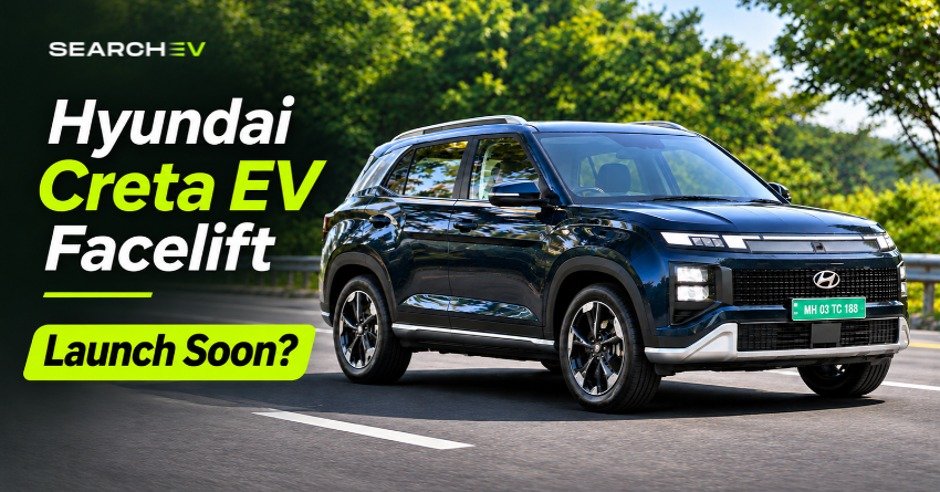
With the third generation of the ICE Hyundai Creta undergoing road tests ahead of the mid-2027 launch timeframe, rapidly gaining attention with its sweeping design architecture and new lighting elements, this could also translate to the launch of the next-generation or facelifted Hyundai Creta EV in India. With technological upgrades, the expected Hyundai Creta EV facelift can be poised to carry forward the momentum the previous gen has established, improving Hyundai’s sales figures.
Introduced in India with 42 kWh and 51.4 kWh battery pack variants, the current Hyundai Creta EV closely mirrors the second-generation Creta ICE (internal combustion engine) counterpart. With the launch of the K3 platform ICE Creta expected in 2027, the Creta EV can either feature a complete overhaul or a next-generation evolution to suit the evolving market requirements in the EV space. Here’s a breakdown of what can be expected from the new 2027 Hyundai Creta EV facelift in India, based on industry insights and speculation, to understand this new SUV’s true capabilities:
2027 Hyundai Creta EV Facelift | The Price Advantage
| Hyundai Creta EV 2027 Variants | Expected Ex-Showroom Price In India |
| 2027 Creta EV 60 kWh | Rs 18.50 Lakh |
| 2027 Creta EV 70 kWh | Rs 26.50 Lakh |
With this pricing, the new 2027 Hyundai Creta EV facelift is expected to sharpen its competition against born-electric vehicles in India, including the Mahindra BE 6, Tata Sierra EV, and Tata Harrier EV, among others, which have currently gathered a huge chunk of sales in the EV spectrum in India. As Hyundai prepares for the transition, the EV space should feature the facelifted Creta EV.
2027 Hyundai Creta EV Facelift Design Attributes
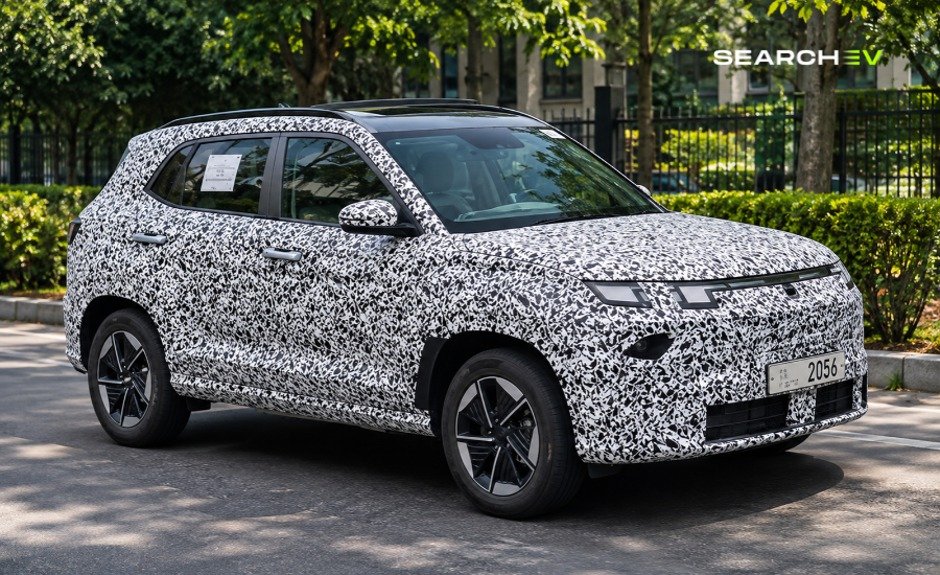
The spy shots of the Hyundai Creta ICE, which are actively being tested in Indian road conditions, showcase a shift in design language; it moves away from the fluidic proportions to a much more boxier design attribution, which is inspired by Hyundai’s global ‘Art of Steel’ design architecture. For the updated Creta EV facelift, the vehicle is expected to come with similar design attributes:
Larger Footprint: Moving away from the 4,340 mm overall body length and 2,610 mm wheelbase construction, the upcoming facelifted Hyundai Creta EV is expected to feature longer dimensions; it should measure 4.4-4.5 metres longer – for an EV, the longer wheelbase directly resonates with better floorboard packaging, allowing more space for a larger battery and rear-seat knee room.
Closed-Off Pixel Fascia: While the ICE Creta test mule showcased what looks like a larger rectangular grille section, the new Creta EV can come with a pixel-like closed grille portion or a textured grille area, while retaining aerodynamically sculpted nose construction and lighting elements similar to the upcoming ICE counterpart in 2027. The nose should also feature a charging port. The fascia should also feature Hyundai’s pixelated LED lighting elements, a signature styling.
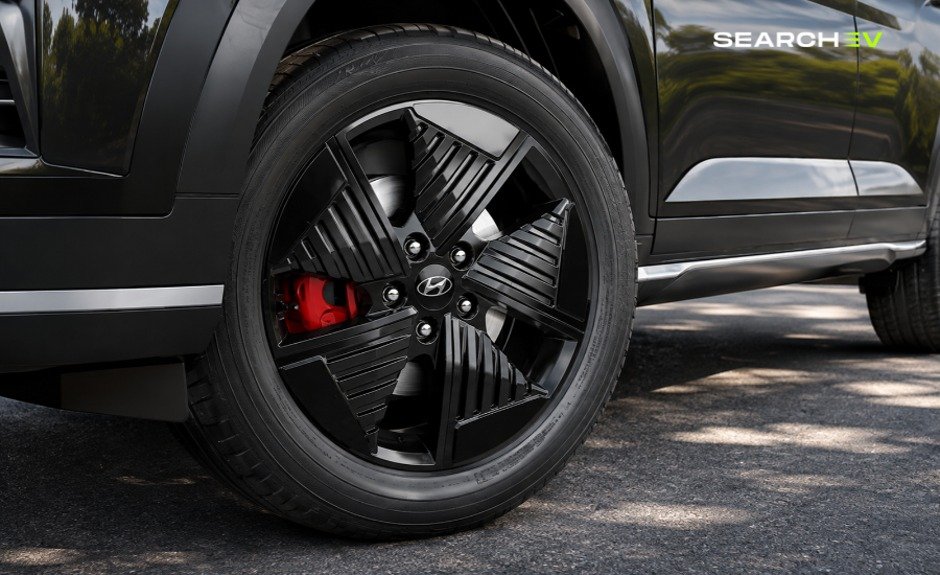
Flush Door Handles And Aero-Wheels: The spy shots of the 2027 ICE Creta showcase flush door handle fitments and redesigned outside rear-view mirrors featuring surround-view camera pods. The same should also feature on the Creta EV counterpart expected in 2027. The Electric SUV will feature aero-optimised alloy wheels measuring 17 or 18 inches with tyres optimised to reduce drag.
Rear Design Attributes: Can expect Hyundai’s pixel lighting elements seeing a continuum in the rear portion, with a full-width connected LED light bar, and a wider glass area with an optimised spoiler for styling and aerodynamic efficiency by managing airflow.
2027 Hyundai Creta EV Facelift Performance
| Hyundai Creta EV 2027 Expected Specifications | ||
| Battery Type | Liquid-cooled Lithium-ion Battery Pack | |
| Battery Options | 60 kWh | 70 kWh |
| Peak Power | 170 kW | 180 kW |
| Peak Torque | 360 Nm | |
| Acceleration (0-100 Kmph) | 6 seconds | 6 seconds |
| Range | 450 km | 540-550 km |
The current Hyundai Creta EV comes in two battery pack options: 42 kWh and 51.4 kWh. While this was superb at the time of launch, other manufacturers have mastered their products to deliver higher performance and range – for instance, the Mahindra BE 6 comes with 59 kWh to 79 kWh packs which is far better than the current-generation Creta EV in India. So, higher-capacity battery packs should be rolled out with the anticipated Hyundai Creta EV 2027 in India for competitiveness.
As for the charging infrastructure, the overhauled Hyundai Creta EV 2027 SUV can feature 100-120 kW peak DC fast charging capacity; for reference, the current generation of Hyundai Creta EV supports 50-100 kW DC fast charging. This can mean that the new Creta EV 2027 will require just 30 minutes to recharge from 10% to 80% state of charge (SOC). The currently in-production Creta EV takes 39 minutes to recharge from 10% to 80% SOC; a bit of improvement is expected.
The 2027 facelifted Hyundai Creta EV is also expected to feature an easily accessible vehicle-to-load (V2L) port for convenience, addressing the feedback from customers regarding the inconvenience of the under-seat rear V2L outlet available in the current-gen Hyundai Creta EV. Speaking of it, the Hyundai Creta EV 2027 is expected to come with multiple feature elements:
2027 Hyundai Creta EV Facelift Cabin Features
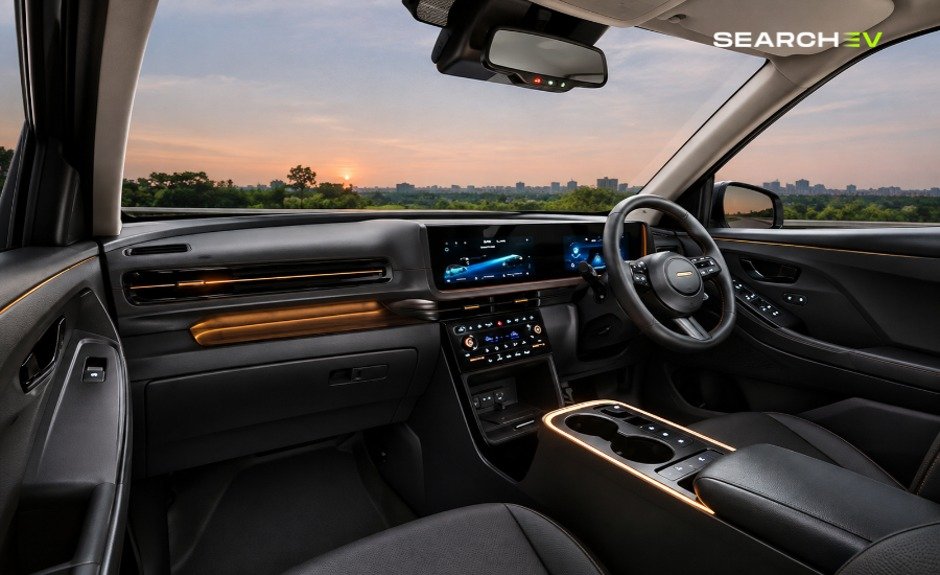
The Hyundai Creta EV 2027 model is expected to come with multiple new-age features to enhance the in-cabin experience and elevate the overall appeal of this upcoming EV SUV slated for India:
Pleos Connected Infotainment System: Replacing the 10.4-inch infotainment system, the 2027 Creta EV facelift will be prepped for the debut of Hyundai’s Pleos Connect system; the spy shots of the Creta ICE 2027 model showcased a freestanding infotainment system paired to a slim minimalist instrument cluster for a seamless display appeal – the EV counterpart should feature the same Pleos Connected Cockpit – will be made available with interactive AI voice assistance and over-the-air-updates (OTA) with a seamless expanded in-cab app ecosystem.
Other features expected to be equipped with the Hyundai Creta EV 2027 facelift are the following:
- Powered ‘Boss Mode’ Seating Setup
- Heads-Up Display (HUD)
- Multi-Colour Ambient Lighting
- Panoramic Sunroof
- Dual-Zone Climate Control
- Enhanced Level 2 ADAS
- Rear Disc Brakes
- 6 Airbags With More On Higher Trims
- Electronic Parking Brake
- Hill Hold System
- Adjustable Regenerative Braking System
Current Creta EV 2026 vs Creta EV 2027 Facelift
| Parameter | Hyundai Creta EV (2025-2026) | Hyundai Creta EV 2027 |
| Platform | K2 Platform Architecture | K3 Platform Architecture |
| Battery Options | 42 kWh | 51.4 kWh | 60 kWh | 70 kWh |
| Peak Power | 99 kW | 126 kW | 170 kW | 180 kW |
| Claimed Range | 420 km | 510 km | 450 km | 550 km |
| Infotainment Cockpit | Dual 10.25-inch Display | ‘Pleos Connect’ Dual Display |
| Pricing | Expected Pricing | From Rs 18,03 Lakh | From Rs 18.50 Lakh |
Conclusion | 2027 Hyundai Creta EV Launch Timeline
Hyundai is expected to showcase the third-generation Creta ICE and strong-hybrid models in early-to-mid 2027 in India, since the current Creta lineup is still young in terms of its lifecycle. Moreover, Hyundai may introduce the Creta EV in late 2027, positioning it strategically between the Ioniq P entry-level electric SUV and the flagship Ioniq 5. Nonetheless, when the Creta EV facelift arrives, the vehicle is expected to slingshot its Creta nameplate based popularity even further. With new age design architecture and connected feature elements, the facelift is poised for success.