Quick reads
- New images of a camouflaged pre-production electric M3 released
- The new electric BMW M3 will be built only at the brand’s main plant in Munich, which turns fully electric from 2027.
- Four electric motors, one at each wheel, were confirmed with the M Concept Neue Klasse shown at Le Mans in June.
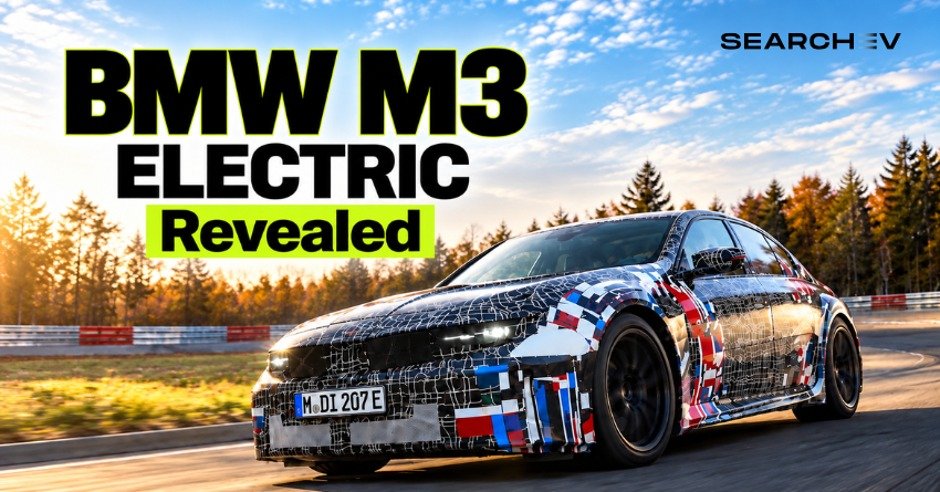
A camouflaged pre-production electric BMW M3 was photographed at the Munich plant with plant head Peter Weber in a release built around the one-millionth BMW M vehicle, a petrol M3 finished in BMW Individual Fire Orange III. The orange car has a straight-six under the bonnet and comes 40 years after the first M3 went on sale. The new, wrapped one does not have an engine at all; instead, it uses an electric powertrain for the same frantic performance.
From 2027, the Munich plant will build only fully electric vehicles, and the electric M3 will be assembled there and nowhere else. It becomes the second Neue Klasse model to be made at the site, after the BMW i3 sedan. Reports have put the cost of converting the plant at around 650 million euros.
Production of the current M3 began in Munich in 2020, which is why plant head Peter Weber said the car has close ties to the site. Franciscus van Meel, who runs BMW M, used the milestone to say that M buyers still value what the badge stands for and that the brand will carry it into the electric era.
What The Camouflage Shows
The recent prototype images confirm that BMW is keeping a massive portion of the concept car design intact. The front fascia retains the sweeping kidney grille layout integrated seamlessly with angular LED headlights. The aggressive vertical track lights seen on the concept have made their way to the production bumpers. However, engineers have slightly toned down the wild aerodynamics for practical road use. The massive air intakes are now smoother. The concept car aero mirrors have been replaced by more conventional side units. We think this is one of the few models that has been well appreciated by the buyers (also BMW fans) and not criticised for its design initially.
At the rear, the integrated ducktail spoiler is gone. BMW opted for a traditional lip spoiler attached to a flatter boot lid. The rear bumper also drops the extreme diffuser for a more aerodynamic shape, which is crucial for maximising battery range. The vehicle rolls on large black alloy wheels and flushed door handles to keep the side profile incredibly clean. A bold M3 graphic spanning the wrapped roof permanently silences rumours about alternative naming conventions.
The original concept itself was first shown at the 24 Hours of Le Mans on 12 June, then at Monterey Car Week in August. Oliver Heilmer, BMW’s design head for the Compact Class, Neue Klasse and M, described the new M design language as the visible front of the Neue Klasse range.
The hardware, as far as it is known
BMW describes the drivetrain as BMW M eDrive, built on its sixth-generation Neue Klasse technology but developed specifically for electric M cars. It combines four electric motors with a control system called BMW M Dynamic Performance Control. The concept’s battery runs at 800 volts with cylindrical cells.
The heart of this new performance machine lies in its quad motor architecture. BMW M division boss Frank van Meel confirmed that the electric M3 will feature a dedicated motor for each wheel. This setup unlocks a new realm of vehicle control. The onboard computers can independently brake inner wheels and accelerate outer wheels during a corner. This torque vectoring capability allows the heavy electric sedan to pivot out of turns with an agility previously impossible in combustion cars.
While BMW has not released official specifications, industry reports estimate the powertrain could produce anywhere from 700 to nearly 1,000 horsepower. However, company executives emphasised that they are not blindly chasing massive power figures. The primary focus remains on usable performance and driver engagement. Managing the substantial weight of the batteries will be the biggest hurdle. The prototype roof wrap suggests BMW might use a carbon fibre or plant composite roof panel to lower the center of gravity.
Market Context and Future Production
BMW confirmed the electric M3 will enter production at its flagship Munich facility. This factory will transition to exclusively building electric vehicles beginning in 2027.
For global driving enthusiasts and Indian buyers eventually, the arrival of an electric M3 might feel like the end of an era. Yet, BMW recognises the enduring appeal of petrol engines. The company will continue to develop and sell a combustion-powered M3 alongside this new electric version. The petrol model will likely feature mild hybrid assistance to meet tightening emission norms while satisfying traditional enthusiasts. Since Munich goes electric-only, that car will have to be built elsewhere. BMW has already said it is moving 3 Series production to Dingolfing.
Conclusion
The camouflaged prototype proves that the electric BMW M3 is rapidly approaching production readiness. By combining the aggressive styling of the Neue Klasse platform with a highly advanced quad-motor setup, BMW is engineering a direct rival to its own petrol powered champion. The ability to precisely manipulate power at each corner could set a new benchmark for handling in the electric era. As testing continues on global circuits, the automotive world waits eagerly to see if this electric super saloon can truly deliver the legendary M driving experience