Chinese EV brand BYD (Build Your Dreams) will soon increase the prices of its entire Indian EV lineup by 2 to 3 percent. Stating higher input costs, the increase in prices comes amidst rising global tensions and increased volatility around supply chains. Starting May 1, 2026, buying a new BYD vehicle will come at a more premium price point, starting from ₹50,000 for the entry level model to a notable ₹1.65 lakh for the top end BYD Sealion SUV.
The May 2026 Price Revision: Spec-to-Spec Impact
Unlike BYD’s minor price adjustment in January 2026, which only affected the base variant of the Sealion 7, this upcoming hike is a blanket revision. We have outlined the projected price structure for the entire lineup once the May 1 price hike takes effect.
| BYD Model | Current Price (Ex-Showroom) | Expected Price (From May 1) | Projected Price Increase |
| BYD Atto 3 | ₹24.99 Lakh – ₹33.99 Lakh | ₹25.49 Lakh – ₹34.99 Lakh | ₹50,000 – ₹1.00 Lakh |
| BYD eMax 7 | ₹26.90 Lakh – ₹29.90 Lakh | ₹27.45 Lakh – ₹30.80 Lakh | ₹55,000 – ₹90,000 |
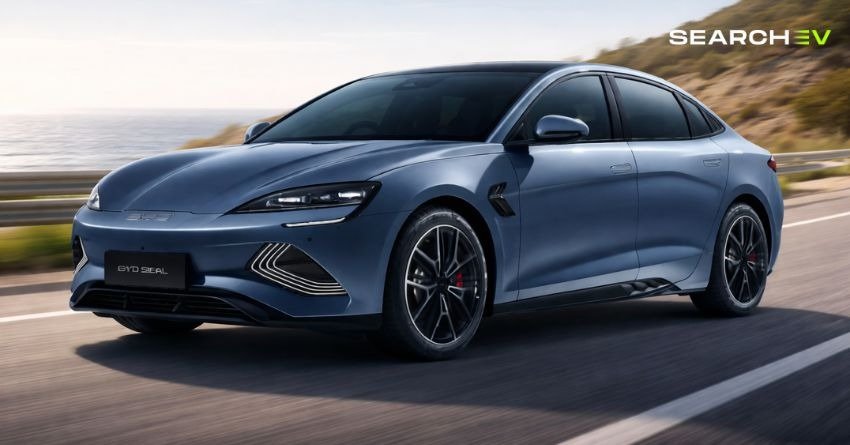
| BYD Seal | ₹41.00 Lakh – ₹53.15 Lakh | ₹41.80 Lakh – ₹54.75 Lakh | ₹80,000 – ₹1.60 Lakh |
| BYD Sealion 7 | ₹49.40 Lakh – ₹54.90 Lakh | ₹50.39 Lakh – ₹56.55 Lakh | ₹99,000 – ₹1.65 Lakh |
Why is BYD Hiking Rates?

BYD is attributing the price hike to a rise in input costs. We have seen automakers cite this reason most of the time, however, in this case it’s really tied directly to severe bottlenecks in global trade routes.
The ongoing geopolitical turbulence and suspension of commercial cargo traffic through the Middle East, specifically the Strait of Hormuz, has crippled automotive supply chains. BYD heavily relies on these maritime routes for the shipment of raw aluminum and petroleum coke. Petroleum coke is a non-negotiable raw material required for the production of synthetic graphite, which forms the anode of the automaker’s proprietary Blade Battery packs.
As shipping conglomerates reroute vessels around the Cape of Good Hope to avoid conflict zones, freight timelines and insurance premiums have skyrocketed. For an EV-centric brand that imports a large percentage of its components into India via the Completely Knocked Down (CKD) or Completely Built Unit (CBU) route, absorbing these sustained logistical costs is no longer feasible.
The Indian Market Context
The domestic EV market in India is maturing, and BYD has painstakingly positioned itself as the premium, advanced battery tech alternative to established legacy automakers.
The effect of the price hike would look higher on the more mass-market options. The Atto 3 has been the backbone of BYD’s private buyer push in India. Pushing its top-end variant dangerously close to the ₹35 lakh mark makes the crossover a significantly steeper investment compared to localised rivals like the Tata Harrier EV.
On the other hand, the flagship Sealion 7 SUV or the low-slung Seal sedan are the brand’s halo products, explicitly targeting buyers who would otherwise walk into a German luxury showroom. Even with a ₹1.65 lakh hike, the Sealion 7 manages to undercut direct electric rivals from Volvo, BMW, and Mercedes-Benz, maintaining BYD’s aggressive value proposition in the luxury tier.