Hyundai and Kia were supposed to be among the winners of the electric transition. They moved early, invested heavily, and built dedicated EV platforms before many rivals. Yet, why Hyundai and Kia struggle to convert ICE customers to EVs remains one of the biggest unanswered questions in the global auto industry. The problem isn’t the cars. It’s everything around them.
Strong EV Foundations
On paper, Hyundai and Kia are doing many things right. They were among the first legacy automakers to develop a dedicated EV platform, the E-GMP architecture, instead of adapting petrol cars for electric use. Models like the Hyundai Ioniq 5, Ioniq 6, Kia EV6, and EV9 have earned genuine praise for how they look, how they drive, and how quickly they can charge.
What works in their favour is clear:
- An 800V electrical system that allows significantly faster charging
- Real-world driving range that holds up beyond brochure claims
- Clean, modern cabins with intuitive tech
- Strong safety performance across global crash tests
And yet, for all this progress, EVs still account for only a small slice of Hyundai and Kia’s overall global sales. The considerable gap between the capabilities of the products and the adoption of customers is fully shown by the fact that their petrol and diesel cars still hold the largest volumes by far.
Price Barrier & Charging Anxiety Persists
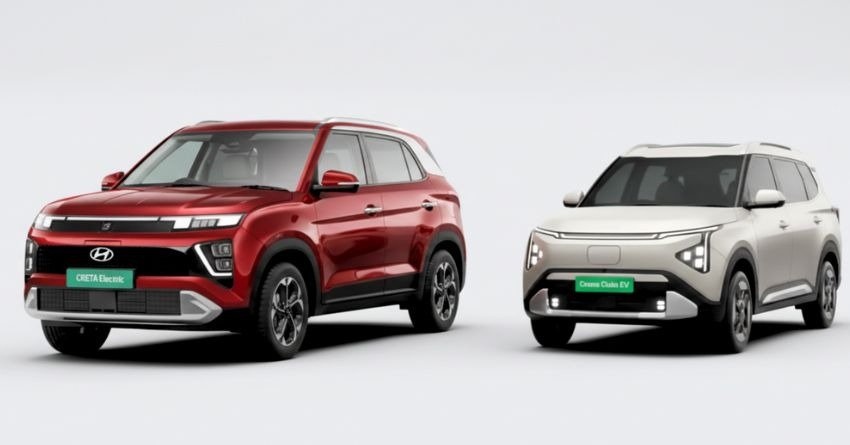
For most ICE customers, the shift to EVs still begins and ends with price. Even in markets with incentives, Hyundai and Kia EVs typically cost more upfront than comparable petrol or diesel models. For customers accustomed to value-focused ICE cars like the Creta, Seltos, or i20, the price jump to an EV often feels difficult to defend.
The gap isn’t just financial. It’s psychological. What holds customers back:
- The price at the beginning of the sale is higher than that of comparable ICE models, a longer
- less clear recovery of costs via savings on fuel
- The issues about the resale value in the long term.
For the mass market, affordable prices continue to be more important than new technologies. EVs will have to become financially reasonable first, and then the features will come.
When it comes to charging, it is still considered the most psychological barrier. Nevertheless, public charging networks are still not reliable in many places, so even though Hyundai and Kia electric vehicles use fast charging, this situation still makes it hard for the customers of ICE who are used to getting quick refilling to change their minds about charging being a lifestyle compromise.
Common buyer concerns include:
- Limited fast chargers outside major cities
- Long charging times compared to fuel stops
- Reliability of public charging infrastructure
Until charging becomes boring and predictable, many ICE customers prefer to wait.
Dealer Experience Gap & Incentives Matter More
This is an under-discussed issue, but a critical one. Hyundai and Kia dealerships are still ICE-first environments. Sales staff are often more confident in selling petrol cars than in telling customers about EV ownership, charging, and long-term costs.
As a result, EV customers often feel less guided during the purchase process. The after-sales experience can also feel underwhelming, leaving many ownership-related questions unanswered.
In contrast, companies that focus exclusively on electric vehicles build the entire customer journey around EV ownership, offering clearer guidance, better support, and a more seamless experience from purchase to long-term use.
Hyundai and Kia EV sales have shown how dependent demand still is on government support. When subsidies are reduced, EV sales drop quickly. In the US, changes to federal incentives directly hit Hyundai and Kia’s EV volumes. This points to a simple reality. Many customers still aren’t choosing EVs on their own. Incentives matter, and without them, ICE cars continue to feel like the safer and cheaper option.
Brand Perception Problem
Hyundai and Kia are also held back by their own success. For years, they’ve been known for making reliable petrol and diesel cars that offer solid value and practical ownership. That image still works brilliantly for ICE sales.
But it cuts both ways. When it comes to EVs, customers don’t naturally see Hyundai or Kia as electric pioneers. Brands like Tesla or BYD come to mind first. Until that perception shifts, converting loyal ICE customers to EVs will remain an uphill task. Changing that perception takes time, not just products.
Competition Is Ruthless
Global EV leaders like BYD operate with a different mindset. BYD has no ICE legacy to protect. Its scale, vertical integration, and aggressive pricing allow it to sell EVs at levels that most traditional automakers struggle to match. Tesla, meanwhile, dominates mindshare through its software-led, EV-first ownership experience.
Hyundai and Kia find themselves stuck in the middle. They are more advanced than traditional automakers that have been slow to adapt, but not as aggressive as brands that focus only on electric vehicles. That middle position is where things start to get uncomfortable.
What Comes Next
Hyundai and Kia are not failing at EVs. But converting ICE customers requires more than good cars. This is exactly why Hyundai and Kia struggle to convert ICE customers to EVs, despite having strong products and advanced technology. To accelerate adoption, they need:
- Sharper EV pricing strategies
- Better-trained, EV-focused dealerships
- Stronger charging partnerships
- Clearer long-term ownership messaging
Until EV ownership feels as easy and predictable as owning a petrol car, many loyal Hyundai and Kia customers will keep choosing what they know.