Honda could be rethinking how electric motorcycles are built. A recently surfaced patent shows a very simple electric bike concept that focuses on keeping costs low. Instead of chasing performance or loading the bike with advanced tech, the idea seems to be about creating a practical electric motorcycle that’s affordable and easy to use in everyday conditions.
Traditional motorcycle companies have struggled to make electric bikes truly popular. Projects like LiveWire show how tough the space can be, especially when the bikes end up costing far more than regular petrol models. Honda’s latest patent suggests the company could be looking at the opposite approach, building an electric motorcycle that focuses on simplicity and low cost rather than premium features.
Simple Electric Bike Design
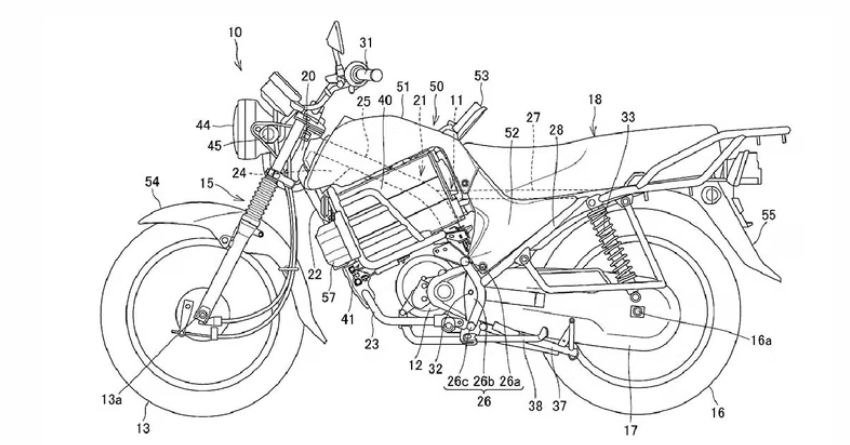
The patent drawings reveal a very basic motorcycle layout that resembles small commuter bikes already sold in many developing regions. Instead of developing a completely new structure, the design appears to use a conventional backbone-style frame normally used in petrol motorcycles.
The electric motor is placed roughly where the engine would normally sit, while the battery packs are fixed on either side of the frame. It’s a straightforward layout that lets Honda use a familiar motorcycle structure, just with an electric setup instead of a petrol engine.
Removable Battery System
One of the key details in the patent is the removable battery setup. The batteries can be taken out of the motorcycle so riders can charge them indoors or swap them with fully charged packs. Because the batteries sit on the outside of the motorcycle, Honda has also designed a protective mounting system. Metal cages hold the batteries in place and lock them securely so they cannot be easily removed without access to the locking mechanism.
Focus On Low Cost
The overall design of the motorcycle is intentionally simple. Apart from the electric motor and battery packs, the rest of the components are kept basic to avoid pushing up costs.
The bike uses a small display that only shows battery information, along with a traditional analogue speedometer driven by a cable from the front wheel. The bike also sticks to simple drum brakes operated by cables, a setup that’s cheap to produce and easy for mechanics to service.
Targeting Developing Markets
Honda has already tried this kind of low-cost thinking with bikes like the Honda Shine 100, which is built to be simple, affordable, and easy to run in markets like India. If the same idea is applied to an electric motorcycle, it would likely be a very basic machine meant for daily commuting rather than performance.
In many countries, riders are simply looking for something reliable and inexpensive to get around. For buyers like that, a straightforward electric bike without expensive extras could actually be a practical option.