
Omega Seiki Mobility unveils Swayamgati, India’s first self-driving electric auto-rickshaw. Luna and Lidar provide the AI with driverless navigation.
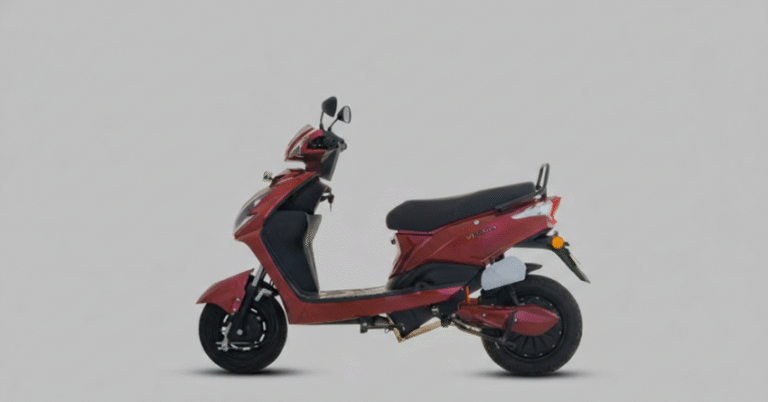
The electric three-wheeler manufacturer Omega Seiki Mobility has recently launched Swayamgati, India’s first-ever driverless electric auto-rickshaw. The one overriding objective is to establish the advanced, integrated autonomous technology, where the well-known electric three-wheeler platform coexists with advanced AI. This can be locally developed, locally manufactured, and locally sold at a price affordable to the Indian mass market. It is designed for last-mile and controlled-environment logistics, serving as both a passenger and a cargo vehicle.
New Self-Driving Auto
The vehicle is more than just an electric auto; it is a fully autonomous vehicle operating within pre-mapped and predefined routes. Operating under no driver intervention in navigation, it relies fully on the integration of its sensor array and software to control movement, velocity, and safety.
Such a development, apart from mere convenience, positions itself as the viable development of efficient and safe intermodal systems within certain commercial and urban ecosystems. Their vision is to bring autonomous mobility into the present; in doing so, they plan to prove India can lead rather than follow in global trends of EVs.
Technology Used Explained
The sophisticated suite of hardware and systems allows self-driving functionality. Key among its features is the LiDAR (Light Detection and Ranging) technology that works to create a 3D map of the surroundings. Then, GPS is integrated so that accurate positioning is achieved, and with multisensor fusion techniques, there is a complete perception of the environment.
The system detects obstacles within a range of six meters so that the vehicle develops a real-time understanding of pedestrians, other vehicles, or any unforeseen objects and safely manoeuvres away from them. Remote safety functions come equipped with it as well, providing an additional layer of operational control and monitoring.
Range And Price
Fueling the Swayamgati is a massive 10.3 kWh battery pack, providing an impressive estimated maximum range of 120 kilometres in a single charge. The plethora of the range suits the application in short-haul and high-frequency operation zones. The pricing looks attractive, too, making it a very good fit for fast-tracking commercial applications of the technology.
| Variant | Starting Price (Ex-Showroom) | Range |
| Passenger | Rs 4 lakh | Up to 120 km |
| Cargo | Rs 4.15 lakh | Up to 120 km |
Where It Will Operate
The deployment plan for the Swayamgati is highly focused. Instead of being developed for immediate city-wide public access, self-driving electric auto-rickshaw will initially focus on controlled environments. Such locations provide predictable routes and lower speed limits and thus serve as excellent proving grounds, where the self-driving technology can demonstrate sufficient safety and efficiency before the technology is released for wider use.
Targeted locations include airports, tech parks, large gated residential communities, industrial zones, and smart cities. This phased approach monitors safety and operational efficiency along with optimisation.
Testing Is Complete
Omega Seiki Mobility put the vehicle through a series of rigorous tests to confirm its reliability. The first phase of trials was successful; in it, the Swayamgati carried out the trial journey of 3 km with seven scheduled stops. These trials confirmed the core capabilities of the vehicle, including obstacle detection and safe avoidance, along with the safe transport of passengers. With testing concluded, the company immediately accepted bookings and deliveries for the vehicle and thus began the second phase of controlled commercial operations.
1,500 self-driving three-wheelers over the next two years
Setting ambitious targets for the manufacture of vehicles, Omega Seiki aims to produce 1,500 self-driving three-wheelers over the next two years. This order quantity will accommodate the anticipated first demand from corporate campuses, logistics hubs, and specified other operating environments. Founder & Chairman Uday Narang stated that the launch is a “bold step into the future of Indian transportation” to say that India can lead the sustainable and scalable mobility revolution.