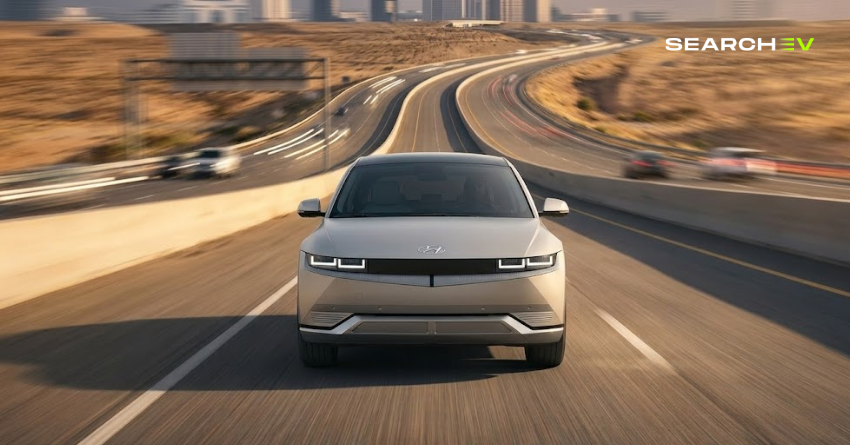
Hyundai has officially rolled out the much-awaited mid-life update for its flagship electric crossover in India, the Ioniq 5. Priced at Rs 55.70 lakh (ex-showroom), the 2026 facelift brings substantial under-the-skin upgrades; most notably a larger battery pack with the key goal of killing highway range anxiety, alongside sharper styling and a more up-to-date technology suite.
For the Indian EV buyer, the Ioniq 5 has always represented a unique combination of retro-futuristic design and premium lounge-like comfort with the technology prowess of a flagship EV. However, the premium electric space has evolved, and the market now accommodates aggressive competitors; therefore, Hyundai’s latest update comes as a much-needed upgrade for the Ioniq 5 to carry its value-for-money proposition.
Old vs. New: What Has Actually Changed in the Ioniq 5?
The new Ioniq 5 commands a significant premium over the outgoing model’s Rs 46.30 lakh base price. Here is a quick breakdown of what that premium buys you:
| Feature Category | 2026 Ioniq 5 Facelift | Pre-Facelift Ioniq 5 |
| Battery & Range | 84.0 kWh (690 km ARAI claimed) | 72.6 kWh (631 km ARAI claimed) |
| Price (Ex-Showroom) | Rs 55.70 Lakh | Rs 46.30 Lakh |
| Infotainment & UI | Next-gen ccNC System with Wireless Apple CarPlay & Android Auto | Older UI system limited to Wired Apple CarPlay & Android Auto |
| Advanced Safety (ADAS) | Upgraded Level 2 ADAS (Adds Parking Collision-Avoidance Rear & Side Distance Warning) | Level 2 ADAS |
| Connected Tech | Adds Remote Immobilisation & In-Car Charging Payments | Standard Bluelink |
| Cabin Ergonomics | Redesigned centre fascia with physical buttons for seat heating/ventilation | Reliance on touchscreen sub-menus for seat heating/ventilation |
| Steering & Ambience | 3-Spoke Leather wheel with interactive 4-dot pixel lights; Obsidian Black cabin | Standard 2-Spoke wheel; Dual-Tone Light cabin themes |
2026 Facelifted Hyundai Ioniq 5: What Does the Flagship EV Offer?
Stretching the Distance Between A Charge
The most crucial change lies in the powertrain itself. Hyundai has ditched the older 72.6 kWh unit in favour of a massive 84.0 kWh lithium-ion battery pack. This upgrade pushes the Ioniq 5’s ARAI-certified (Automotive Research Association of India) driving range to a class-leading 690 km. For buyers frequently tackling long road trips, this 59 km boost translates into tangible real-world confidence, reducing the need for mid-journey charging stops.
– Exterior and Interior Refinements
Visually, the Ioniq 5 retains its signature Parametric Pixel styling but sharpens the edges. The crossover gains redesigned front and rear bumpers, robust skid plates, a new rear spoiler, and a hi-tech V-garnish lighting signature. The vehicle now rides on a freshly designed set of aerodynamic, sporty alloy wheels and is available in four specific paint shades: Gravity Gold Matte, Midnight Black Pearl, Titan Grey, and Optic White.
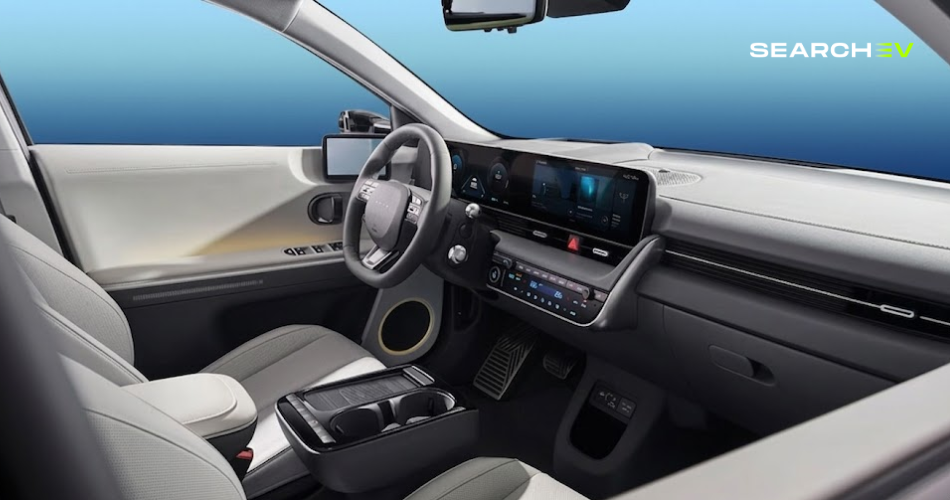
Inside, the airy, lounge-style layout remains, but the colour palette has shifted completely to a much sportier, easier-to-maintain Obsidian Black theme. The driver is greeted by a new 3-spoke leather-wrapped steering wheel featuring an interactive 4-dot pixel light and a heating function.
– Tech and Safety Additions
Digital interaction gets a major bump via the new Connected Car Navigation Cockpit (ccNC) system, housing the dual 12.3-inch displays. This system finally brings Wireless Android Auto and Apple CarPlay into the mix, alongside over-the-air updates. Interestingly, Hyundai has introduced a new in-car payment system, enabling owners to pay for public EV charging directly through the central infotainment screen.
On the safety front, the ADAS suite is further fortified. Recognising the challenges of manoeuvring its wide wheelbase in tight Indian urban spaces, Hyundai has added Parking Collision-Avoidance Assist – Rear (PCA-R) and Side Parking Distance Warning (PDW-Side).
Ioniq 5 vs. The Premium EV Segment
At Rs 55.70 lakh, the updated Ioniq 5 operates in a highly volatile and competitive segment.
- The Sibling Rivalry (Kia EV6): The Kia EV6 shares the exact same E-GMP architecture and 84.0 kWh battery pack, but it targets a fundamentally different customer. While the Ioniq 5 is more of a comfortable cruiser via a Rear-Wheel Drive (RWD) setup, the EV6 GT-Line is an aggressive, driver-focused machine offering an All-Wheel Drive (AWD) layout that generates a massive 325 bhp. It also carries a significantly higher starting price of Rs 65.97 lakh.
- The New Contenders (BYD Seal and Sealion 7): BYD’s low-slung Seal sedan (starting much lower at Rs 41.00 lakh) heavily undercuts the Ioniq 5 while offering blistering sports-car dynamics and a 61.44 kWh base battery. Meanwhile, the BYD Sealion 7 SUV also challenges it directly on tech and battery space. However, the Ioniq 5 holds a critical advantage of Hyundai’s vast, established service network across India, which offers buyers immense peace of mind.
- The European Badges (Volvo EX40 and BMW iX1 LWB): Against the Volvo EX40 (Rs 50.10 lakh) and BMW iX1 (Rs 51.40 lakh), the Ioniq 5 lacks the traditional European luxury badge. However, it dominates both in terms of sheer cabin real estate, its dedicated EV skateboard platform, and a significantly larger battery pack (84.0 kWh compared to Volvo’s 69 kWh and BMW’s 66.4 kWh), offering vastly superior real-world highway range.