Tesla has introduced a 6-seater version of the Model Y electric crossover. Christened as the Model Y L, the new variant not only brings a longer wheelbase but also a more powerful powertrain and AWD capability. Despite the improved specs and added practicality, the Tesla Model Y L is nearly ₹6 lakh less expensive than the top-spec variant of the short-wheelbase model.
This sweetens the deal to a great extent, presenting the Tesla Model Y L as a more value-for-money offering. While the standard Tesla models have received a muted response in terms of overall sales since launch, it would be interesting to see how the new Model Y L fares. While Tesla’s standard models have received a relatively muted response in terms of overall Indian sales since launch, the aggressive pricing of the Model Y L could easily shift the momentum. But how does this stretched American crossover stack up against established global players?
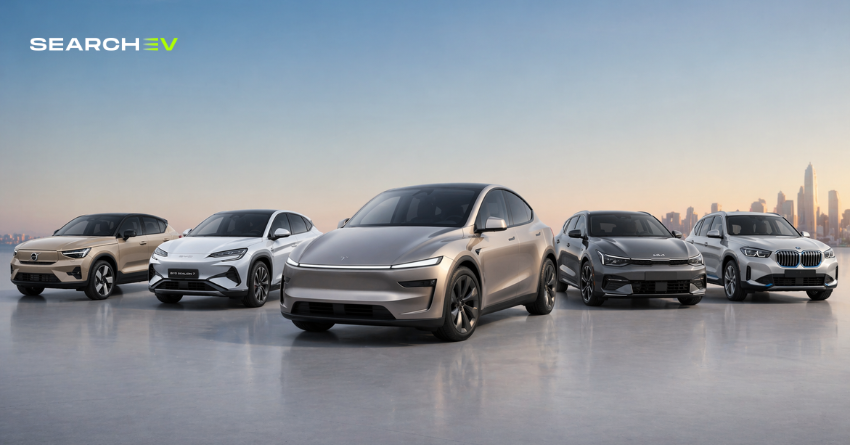
If you are planning an EV purchase in this segment, seeing how it fares against the competition will put things into perspective. Here is a definitive, spec-to-spec competitor analysis of the new Tesla Model Y L against its closest premium EV rivals: the BYD Sealion 7, Kia EV6, BMW iX1 LWB, and the Volvo EC40.
Who Does the Model Y Compare to: An Overview
The ₹50 lakh to ₹70 lakh electric vehicle bracket has gotten pretty competitive, characterised by large battery packs, upscale cabins, powerful powertrains and dedicated born-electric platforms. The Model Y L (priced at ₹61.99 lakh) enters this space as the only electric three-row offering in its immediate price bracket. While it’s not a full-fledged six-seater and more of a 4 + 2, the extra cabin flexibility and the luxury of expanded boot space are undeniable assets
To ensure a level playing field, we are comparing the Model Y L against 5-seater luxury crossover SUV EVs that fall within a similar price and performance corridor.
The Chinese EV Giant‘s BYD Sealion 7 is a close match to the Model Y L’s battery size, performance, and all wheel drive capability, though it costs less than that.
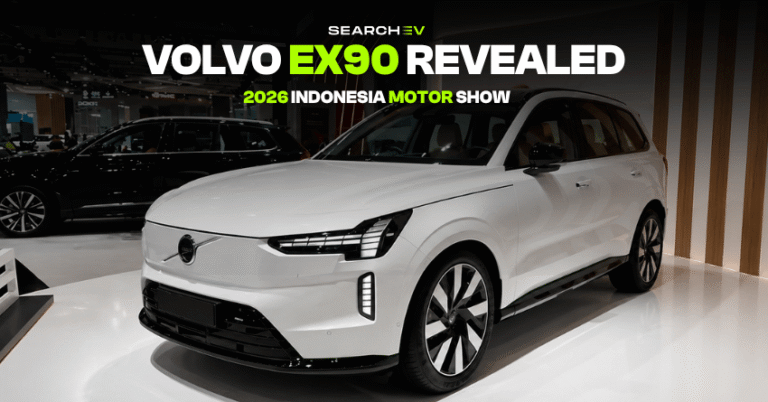
On the other hand, the options from the legacy luxury car makers like BMW iX1 and Volvo EC40 are not the outright champions in spec numbers in this comparison, but offer a more inviting cabin experience compared to Tesla’s minimalism-led DNA.
On the other hand, the Kia EV6 is Kia’s flagship EV in India, and while it promises solid specs and sporty-futuristic design, its CBU (Completely Built Unit) pricing structure makes it feel expensive when parked next to the surprisingly aggressive price tag of the Tesla Model Y L (which is also a CBU).
| Feature | Tesla Model Y L | BYD Sealion 7 | Kia EV6 | Volvo EC40 | BMW iX 1 LWB |
| Price | ₹61.99 Lakh | ₹49.40 – ₹54.90 Lakh | ₹65.96 Lakh | ₹59.00 Lakh | ₹51.40 Lakh |
| Battery Capacity | 88.2 kWh (est) | 82.56 kWh | 84.0 kWh | 78.0 kWh | 66.4 kWh |
| Claimed Range | 681 km (WLTP) | 460 – 480 km (WLTP) | 581 km (WLTP) | 530 km (WLTP) | 531 (MIDC) |
| Power | 500+ hp | 313 – 530 hp | 325 hp | 408 hp | 204 hp |
| Wheelbase | 3,040 mm | 2,930 mm | 2,900 mm | 2,702 mm | 2,800 mm |
| DC Fast Charging | 288 km in 15 mins (up to 250kW) | 10–80% in 45 mins | 10–80% in 18 mins | 10–80% in 27 mins | 32 mins |
| Boot Space | 420L (all seats up) + 116L frunk | 500L + 58L frunk | 490L + 20L frunk | 404L + 31L frunk | 490L |
| Key Highlights | 6-seater layout, Longest Range, Supercharger Access | Quickest acceleration, CTB Tech, Value for Money | 800V Ultra-fast charging architecture, Striking Design | Robust active safety protocols, Premium Scandinavian build | Class-leading rear legroom, Premium German craftsmanship, Engaging driving dynamics |
Tesla Model Y vs Rivals: The Dimension (Exterior and Interior)
The Model Y L dominates the dimensional chart, beating its rivals in virtually every physical aspect.
| Feature | Tesla Model Y L | BYD Sealion 7 | BMW iX1 LWB | Kia EV6 | Volvo EC40 |
| L / W / H (mm) | 4,976 / 1,982 / 1,668 | 4,830 / 1,925 / 1,620 | 4,616 / 1,845 / 1,627 | 4,695 / 1,890 / 1,570 | 4,440 / 1,873 / 1,591 |
| Wheelbase (mm) | 3,040 | 2,930 | 2,800 | 2,900 | 2,702 |
| Ground Clearance (mm) | 167 | 170 | 190 | 178 mm | 171 mm |
| Boot Space (Litres) | 1,076 (third row seats down) + 116 Frunk | 500 + 58 Frunk | 490 | 490 + 20 Frunk | 404 + 31 Frunk |
The sprawling 3,040 mm wheelbase of the Tesla not only accommodates the third row but also allows for a wider, flatter lithium-ion battery pack integration within the floorpan, optimising weight distribution and lowering the centre of gravity.
When evaluating cargo capacity, the Model Y L shines with a cavernous 2,539-litre volume with the second and third rows folded. Even with all seats up, it provides a highly practical 420 litres of boot space, complemented by a massive 116-litre frunk. For this to be an even comparison, we have compared the Model Y L’s boot space with the last two rows up.
The Sealion 7 emerges as the second-biggest EV here, while the iX1 LWB rides the highest with a 190 mm ground clearance.
Tesla Model Y vs Rivals: Performance
| Model | Battery Capacity | Motor Setup | Power (kW) | 0-100kph |
| Tesla Model Y L | 88 kWh (est) | Dual (AWD) | 500+ | 5.0 sec |
| BYD Sealion 7 | 82.56 kWh | Single / Dual (AWD) | 313 / 530 | 6.7 / 4.5 |
| Volvo EC40 | 78.0 kWh | Dual (AWD) | 408 | 4.7 sec |
| Kia EV6 | 84.0 kWh | Dual (AWD) | 325 | 5.3 sec |
| BMW iX1 LWB | 66.5 kWh | Single (FWD) | 204 | 8.6 sec |
Tesla has equipped the Model Y L with an estimated 88 kWh battery pack and a highly responsive dual-motor AWD system, pushing out over 500 hp. This translates to a rapid 0-100kph sprint time of 5.0 seconds.
However, the BYD Sealion 7 AWD takes the crown for raw acceleration. Utilising its proprietary Blade Battery setup to sustain high discharge rates safely without thermal runaway concerns, its 530 hp output propels it to 100kph in just 4.5 seconds (AWD model). The Volvo EC40 also edges past the Tesla in a straight line (4.7 seconds), while the FWD BMW iX1 LWB (8.6 seconds) lags significantly behind, as their powertrains are tuned more for relaxed urban drivability than outright performance.
Tesla Model Y vs Rivals: Range and Charging
| Model | Claimed Range | DC Fast Charging Time (10-80%) |
| Tesla Model Y L | 681 km (WLTP) | 288 km in 15 mins (250kW max) |
| Kia EV6 | 581 km (WLTP) | 18 mins |
| Volvo EC40 | 530 km (WLTP) | 27 mins |
| BMW iX1 LWB | 531 km (MIDC) | 32 mins |
| BYD Sealion 7 | 480 / 460 km (WLTP) | 45 mins |
The Tesla Model Y L holds a massive advantage in terms of long-distance travel, with the highest claimed range of 681 km on the WLTP cycle. Thanks to its larger pack and Tesla’s highly optimised powertrain efficiency algorithms, it is a full 100 km ahead of the Kia EV6.
When it comes to charging speeds, however, the Kia EV6 still remains the benchmark. Its 800V electrical architecture allows it to manage thermal loads incredibly well during fast charging. It supports DC fast charging of up to 350 kW, achieving a 10-80% state of charge in a blistering 18 minutes. Tesla’s proprietary Supercharger network integration allows the Model Y L to accept up to 250kW DC speeds, effectively adding 288 km of range in just 15 minutes.
On the other hand, while the BYD Sealion 7 AWD, gives a tough competition to the Tesla in overall performance, it falls short in highway touring capabilities with the lowest WLTP range (460 km) and the slowest charging time (45 minutes) in this group.
Tesla Model Y vs Rivals: Price and Verdict
At ₹61.99 lakh (ex-showroom), the Model Y L presents surprisingly good value despite being an import. We even anticipate Tesla to reduce the pricing of the short wheelbase variants after this, which actually look very expensive compared to what this car offers. highly aggressive value proposition. Surprisingly, despite being longer, accommodating more passengers, and packing a larger battery alongside a stronger AWD powertrain, it undercuts the standard Model Y Long Range RWD by around ₹6 lakh.
- BYD Sealion 7 (₹49.40 – ₹54.90 lakh): The most accessible AWD performance EV here, offering unmatched speed and value, though buyers must accept compromises regarding outright range.
- BMW iX1 LWB (₹51.40 lakh): Prioritises extended rear-seat legroom and German brand prestige over top-tier EV performance and battery size.
- Volvo EC40 (₹59.00 lakh): A strong dual-motor contender emphasising sustainable interior materials and top-tier active safety systems.
- Kia EV6 (₹65.96 lakh): Futuristic styling, a plush cabin, and ultra-fast 800V charging capabilities, however, the priciest of the lot, which erodes its value for money quotient.
The Tesla Model Y L completely shifts the narrative in the ₹60 lakh EV segment. It is the definitive choice for buyers who prioritise maximum driving range, seamless Supercharger accessibility, and the distinct practicality of a 6-seat layout.
The only reasons you would want to look beyond it is the Brand’s limited footprint or the vehicle’s simplistic cabin design and lack of the sense of occasion which buyers at this price expect.