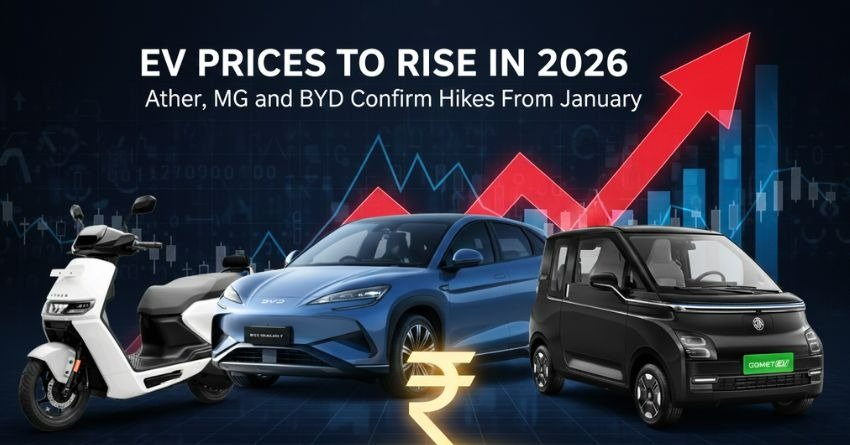
Multiple Indian electric vehicle manufacturers have announced price increases for key EV models, hitting both two-wheelers and electric SUVs. The revised costs will go into effect on January 1, 2026, making electric vehicles more expensive for new consumers at the beginning of the year.
The ongoing stress from growing input costs, costlier components, and greater production charges has pushed businesses to increase the pricing after holding rates steady for most of 2025.
Ather Electric Scooters
Ather is raising its electric scooter prices by up to ₹3,000 from January 1, 2026. The Bengaluru-based EV maker noted that the increase is due to rising global raw material prices, currency exchange rate fluctuations, and higher prices for vital electronic components, all of which have increased overall production costs.
The price rise will apply to all models, including the Ather 450 series and the family-friendly Ather Ritza. This increase will be specific to the variants and cities. Meanwhile, Ather’s annual ‘Electric December’ campaign is also giving perks of up to ₹20,000 in select cities. This aims to help customers avoid price hikes. Advantages include cash discounts, EMI options, and an 8-year battery warranty. Customers who get the electric scooters by the end of December 2025 can lock in current prices.
MG Windsor EV, Comet EV and ZS EV
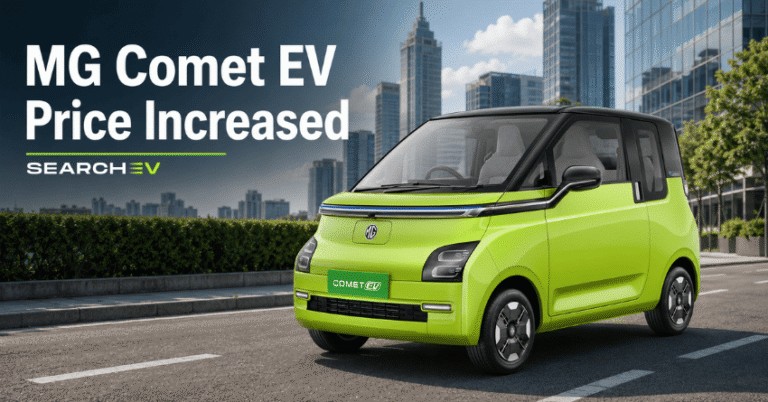
JSW MG Motor has also announced that its electric car lineup will see up to a 2% price rise starting January 1, 2026. The change will affect EVs such as the Windsor EV, Comet EV, and ZS EV, with the exact amount depending on model and variant.
According to the business, the reason for the hike is due to the rising input costs, increased operating expenses, and persistent supply-chain issues that will affect manufacturing costs until 2025. MG is expected to disclose the revised model and variant-wise revised prices closer to the effective date, following the industry practice of annual price hikes at the start of a new calendar year.
BYD Sealion 7
BYD India has stated that the Sealion 7 electric SUV will see a price increase from January 1, 2026. While the firm has not yet announced the actual increased costs, it has said that customers who reserve the Sealion 7 by December 31, 2025, will be able to lock in current pricing and avoid the impending hike. BYD says the increase in the price is due to higher input costs, rising component prices, and broader economic constraints.
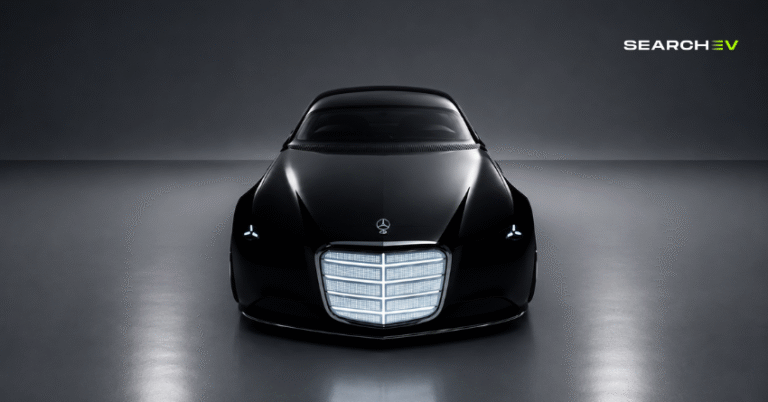
Mercedes-Benz India
Mercedes-Benz India is raising prices by up to 2% across its whole lineup, including EVs, beginning January 1, 2026, due to unfavourable Euro-INR exchange rates, rising input/logistics costs, and inflation, though they are absorbing part of the impact to help customers.
This increase affects all models, including popular EVs like the EQS, with future quarterly changes being considered to balance expenses and ensure long-term stability in the Indian luxury market.
The Hike Table
| Brand | EV Model | Type | Price Hike |
| Ather Energy | 450 Series | Electric Scooter | Up to ₹3,000 |
| Ather Energy | Rizta | Electric Scooter | Up to ₹3,000 |
| MG Motor India | Windsor EV | Electric Car | Up to 2% |
| MG Motor India | Comet EV | Electric Car | Up to 2% |
| MG Motor India | ZS EV | Electric SUV | Up to 2% |
| BYD | Sealion 7 | Electric SUV | To be announced |
| Mercedes-Benz India | EQS | Electric Car | Up to 2% |
Some Brands Have Already Raised Prices
Some big automakers have already increased their prices for 2026. Mahindra & Mahindra raised prices by up to 3% across its SUV and commercial vehicle portfolios in April 2025, citing higher input and commodity costs. Similarly, BMW India has announced a price increase of up to 3% beginning September 1, 2025, for both locally built and imported models, including its electric vehicles.
These earlier price increases show how rising prices have impacted the whole automotive industry. The EV price increases anticipated for 2026 are part of a broader trend, not just decisions made by a few brands.
Final Verdict
With so many new models from all the categories set to launch into the market by 2026, the Indian EV market will also see a significant rise in pricing across multiple segments. From electric scooters to premium electric SUVs, consumers will have to pay more beginning in January. For those looking to go electric, December 2025 may be the best time to buy and lock in current costs before the increases take effect.