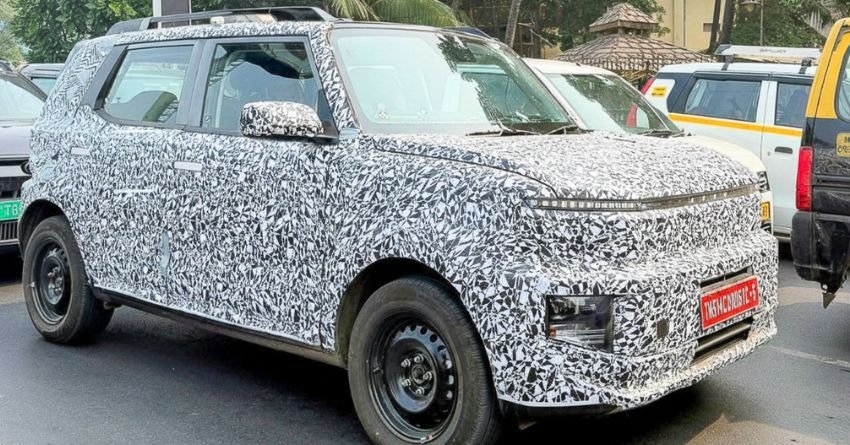
Hyundai India is currently road-testing a brand-new compact electric SUV. Spotted on local roads this month, the vehicle is being built to give customers a more affordable zero-emission option than the current high-end models.
The EV was heavily camouflaged, but its size and shape clearly match those of the Tata Punch. This move shows that Hyundai wants to move beyond luxury battery-powered cars and start selling to regular families who want to switch to a plug-in vehicle without spending a fortune.
Boxy Design Language
From the spy shots, it is clear this SUV will have a tall, boxy look. It features the signature split LED headlamps that many new Hyundai cars use, along with a flat front end since battery-operated cars don’t need a traditional radiator grille. The short wheels and high ground clearance suggest it is being tuned specifically for Indian city streets and bumpy roads.
Battery And Range
While the company hasn’t shared official numbers yet, the SUV will likely use a battery pack between 25 kWh and 30 kWh. This should be enough to give the zero-emission car a real-world range of about 250 km to 300 km. It is designed for people who need a plug-in car for daily work trips but also want to charge it quickly at home or at a public charging station.
Simple Interior Tech
Inside, the SUV will keep things practical but modern. It is expected to come with a large touchscreen that handles everything from maps to battery stats. Because it is a battery-powered vehicle, the cabin will likely feel more spacious than a petrol car of the same size, giving passengers more legroom despite the small exterior.
| Expected Feature | Details |
| Body Style | Micro SUV |
| Target Range | ~300 km |
| Primary Rival | Tata Punch EV |
| Launch Year | Late 2026 |
Making It Locally
Hyundai plans to build this zero-emission SUV at its plant in Tamil Nadu. Making the car in India is the only way to keep the price low enough to compete with brands like Tata and MG. By sourcing battery parts and motors locally, they can avoid the high taxes that usually make plug-in cars so expensive for the average customer.
Why It Matters
This EV fills a massive gap in Hyundai’s lineup. Right now, most of their battery-operated cars are too expensive for many people. By launching a smaller, tougher SUV, they are directly taking on the market leaders. It proves that the shift to zero-emission driving isn’t just for luxury customers anymore; it’s finally coming to the mass market.