For years, the biggest argument against electric vehicles has been the wait time at the plug. While gas car drivers are in and out in 5 minutes, EV owners have had to plan their lives around 30-to-40-minute charging stops. BYD is looking to end that frustration with the announcement of its new Super E-Platform. The company is promising a 2026 rollout of Megawatt (MW) charging that finally matches the speed of a traditional gas station.
The 1.2MW Leap
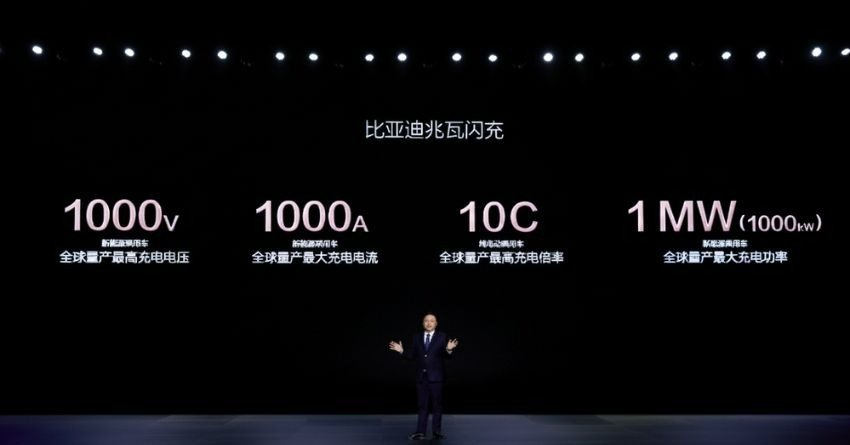
The numbers behind this tech are hard to ignore, while BYD is moving toward a 1,000-volt high-voltage architecture designed to handle 1.2 Megawatts (1,200kW) of power. To put that in perspective, today’s “ultra-fast” chargers usually top out around 350kW. By tripling that power, BYD claims drivers can add about 500 kilometres of range in roughly 5 minutes. It’s a pace of about 2 kilometres of range added for every single second the car is plugged in.
Next-Gen Flash Batteries
You can’t just pump that much electricity into a standard battery without it failing. To make this work, BYD evolved its famous “Blade Battery” into what they call a Flash Charging Battery. This battery features a 10C charge rate, meaning it can handle massive energy loads far better than previous generations.
By redesigning the internal “ion channels,” they’ve managed to reduce internal resistance by half. This ensures the battery stays healthy even when being hit with a megawatt of power.
Beating the Heat
Pushing 1,000 amps into a battery generates a significant amount of heat, which can seriously damage the cells if not properly managed. To address this issue, BYD is using silicon carbide (SiC) chips, which can handle high voltage much more effectively than conventional technology.
They’ve also designed a heavy-duty liquid cooling system that doesn’t just sit in the battery; it actually runs through the charging cables and the plug itself. This keeps everything chilled during those high-speed sessions, ensuring the energy actually goes into the battery rather than being wasted as heat.
The 2026 Reality
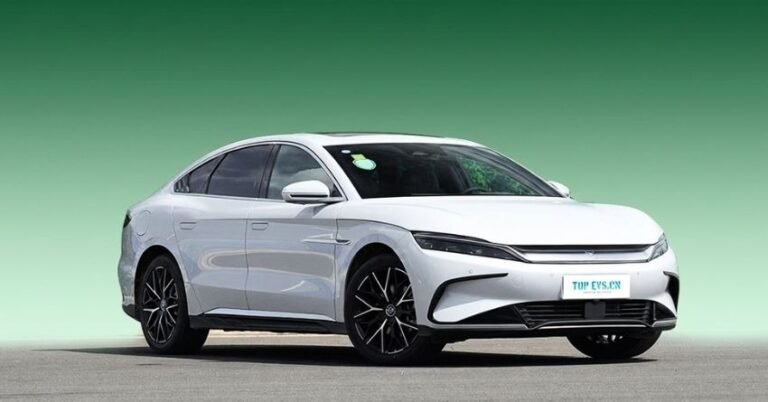
This isn’t just a “cool idea” stuck in a lab because the brand has a clear deadline to get this into the hands of drivers by 2026, likely starting with their flagship Han and Tang models. But a fast-charging car is useless without a place to plug it in, so the company is also planning a massive rollout of dedicated Megawatt charging stations.
As they compete with rivals like Huawei and Zeekr, BYD’s move marks a shift in the industry. The focus is no longer on how big the battery is, but on how quickly you can get back on the road. By 2026, the “long wait” for an EV charge might finally be over.