BYD is the world’s largest EV producer, with more EVs sold than Tesla. It leads in battery technology, cost control, and scale. However, in India, a market that added over 1.5 million EVs last year, BYD remains a modest participant. If the technology is superior, why aren’t Indian consumers lining up?
A global EV leader faces headwinds
BYD’s global growth has been rapid. In 2024, the company sold over 3 million electric vehicles globally, owing largely to its dominance in China. BYD’s vertically integrated strategy, in which it manufactures its own batteries, motors, and chips, allows it to manage costs more effectively than most of its competitors.
However, due to diminished domestic demand and intense pricing competition in China, BYD reportedly announced its slowest sales growth in five years. As a result, the business has begun to focus more on foreign markets like those in Europe, Southeast Asia, and India.
India tells a different story
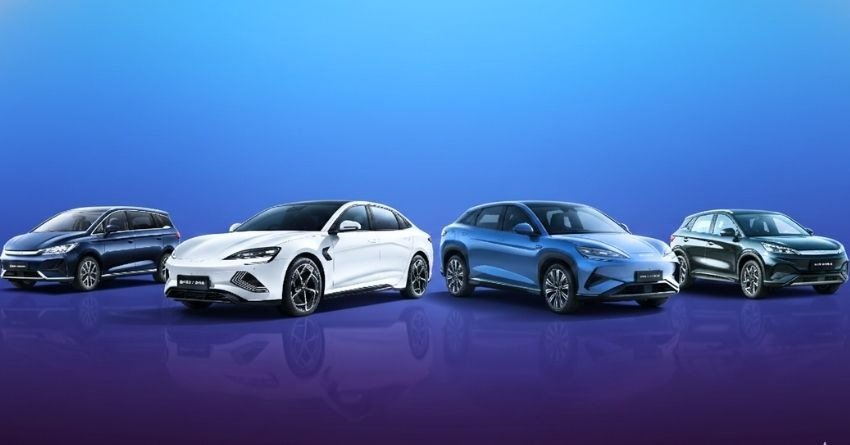
Currently, BYD only offers three models in India: the e6 MPV, the Seal sedan, and the Atto 3 SUV. In terms of battery safety, motor power, and charging capacity, these electric vehicles perform better when compared to other Indian electric vehicles.
However, sales numbers remain low. In FY2024, BYD sold fewer than 6,000 passenger vehicles in India. In comparison, Tata Motors sold nearly 70,000 EVs over the same time period, partly due to models such as the Nexon EV and Tiago EV.
The most significant problem is pricing
BYD’s India lineup starts at roughly ₹30 lakh, yet nearly 70% of India’s EV passenger vehicle demand is around ₹20 lakh. This is where Tata, Mahindra, and MG excel.
The gap is structural, and the brand imports the majority of its passenger vehicles into India, paying customs taxes of up to 70%, resulting in prices much beyond locally built alternatives. Without localisation, BYD will be unable to compete in India’s EV market on volume.
Manufacturing Roadblocks
BYD had proposed putting up a production unit in India, but plans were halted due to increased scrutiny of Chinese investors. The lack of local production has hampered scale, pricing flexibility, and long-term confidence.
Indian brands benefit from:
- Production-linked incentives (PLIs)
- Lower logistics expenses.
- Faster supply chain response.
BYD, despite its global presence, lacks these benefits in India.
Ecosystem Over-Engineering
Indian EV consumers place a high importance on service coverage and reliability. Tata Motors has more than 2,000 service centres across the country. Mahindra and MG are rapidly expanding their dealer and charging partnerships.
Despite its growth, BYD’s dealership network is restricted to large cities. For consumers in Tier 2 and Tier 3 markets, where EV adoption is expanding at the fastest rate, this is a deal-breaker.
The Perception Gap
In India, BYD operates in a more conservative policy and consumer environment, which extends beyond pricing and infrastructure.
In recent years, heightened geopolitical tensions have resulted in greater regulatory scrutiny of Chinese companies across sectors. This has led to more strict laws, longer investment approval processes, and long-term expansion delays for automakers. These factors impact how quickly a company can scale and localise operations, even though they might not have a direct impact on sales.
Another factor is consumer sentiment. Customers in the premium segment, where BYD is now competing, tend to look beyond just performance and technology. For customers who are spending ₹30–40 lakh, long-term reliability, a dependable service network, and trust in the brand often matter more than added features or technical upgrades. In this price range, confidence in ownership and continuity usually outweigh headline-grabbing specifications.
As a result, even technically superior products face opposition if market trust and visibility are not yet established.
Final Verdict
BYD’s problem in India is not competition, but structure. Despite its global reach, the company has not yet adapted to the Indian EV market, where long-term commitment, local partnerships, and policy alignment are just as important as the product itself. Its integration into India’s supply chain has been slowed by delays in establishing local manufacturing, which has kept it on the sidelines of the nation’s EV growth and limited its ability to react swiftly to changes in the market.
Going forward, BYD’s success in India will depend less on better cars and more on strategic decisions. India’s EV expansion over the next decade will be driven by localisation, fleet electrification, and strong public–private partnerships. Carmakers that invest early in this ecosystem are likely to shape the market. Whether BYD becomes one of them will depend on how deeply it commits to India beyond just selling vehicles.