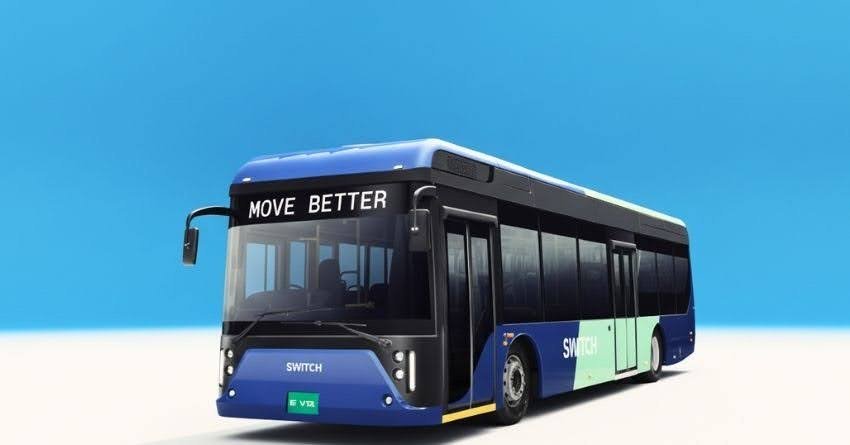
Ashok Leyland signs 20-year pact with CALB of China, wherein ₹50,000 Cr will be invested to develop and manufacture EV lithium-ion cells in India within five years.
Ashok Leyland has now committed to a 20-year strategic partnership with the China-based CALB Group, the world’s third-largest producer of batteries, which includes materials used in the manufacturing, development, and research of lithium-ion batteries. That makes India the hotspot for high-performance, superior lithium-ion cell technology, the next big thing in India’s EV (Electric Vehicle) aspiration. Unlike other kinds of setups that are generally short-term, this is designed to be a long-term commitment, hence developing the platform that ensures that India has the capacity and resources needed to manufacture high-quality batteries at home.
According to Ashok Leyland CEO Shenu Agarwal, the process of learning and mastering technology is as important as the technology itself. This mindset sets the tone for a deliberate, patient, and structured approach to EV battery innovation.
Massive Investment for EV Leadership
Over the next 10 years, Ashok Leyland will spare just above ₹50,000 crore for the initiative. This isn’t about building battery packs just for its buses and trucks but for two- and three-wheelers, passenger cars, and energy storage solutions as well.
In making such a huge financial commitment, Ashok Leyland has made its long-term intent clear in becoming a leader in India’s EV ecosystem. Manufacturing infrastructure, R&D, software development for battery management, and even skills build-up initiatives associated with the investment are set for Ashok Leyland’s take-centre relevance in India’s march towards electrification.
Phased Learning Approach
This tie-up follows a phased learning business model and is supposed to develop domestic capability to excel in lithium-ion technology.
| Phase | Duration | Focus | Goal |
| Initial | Immediate | CALB supplies cells; Ashok Leyland assembles packs | Master thermal management, software integration, and packaging |
| Mid-Term | 5 years | In-house cell design & manufacturing | Achieve fully India-made lithium-ion cells |
Initially, Ashok Leyland can bank on CALB expertise for cell supply while it seeks to master pack assembly, thermal management, and software integration. Gradually, the company will introduce an internal design for the cell and manufacturing, while dependence on imported inputs will reduce, and domestic battery capacities will be strengthened for India’s needs.
Rolling Out Across Markets
The battery packs will power Ashok Leyland’s own buses and trucks. However, that is only part of the vision for within two to three years, production will scale to energising two-and three-wheelers, passenger cars, and grid storage solutions.
This phased expansion allows the company to adequately scale up, overcoming technological challenges while progressively ramping up output. The company is thus assured of a reliable supply chain to cater to several vehicle segments and energy applications, which will be critical as the EV adoption accelerates, as expected across India.
Boosting India’s EV Ambitions
Batteries are the most expensive and strategic component of EVs. India’s EV market is expected to take off and bloom. On this, BloombergNEF has stated that the country will only be overthrown by the USA & China and will become the third-largest battery market in the world in 2035, and the demand will increase nearly 19 times.
By localising battery technology, Ashok Leyland shall not only strengthen its own position but also draw a roadmap for other Indian businesses. The significance of closing the technology gap should lead to India’s larger agenda of electrification, less reliance on imports, and a self-reliant EV ecosystem.
Long-Term Vision for Self-Reliance
This entire 20-year relationship is meant to result in the full domestication of lithium-ion cell production in India. Ashok Leyland further plans to set up an independent R&D hub dedicated to materials science, packaging, and battery management systems. Continuing technical support from CALB will ensure the transfer of know-how and skills development.
Ashok Leyland has positioned itself as one of the technology leaders in the supply chain in terms of electric vehicles in the country, producing batteries that will match international standards and serve the nation’s green energy aspirations. Thus, the partnership goes beyond investment; it is a strategic road map for building the domestic capabilities for India’s EV batteries and the innovation that can occur for decades to come.