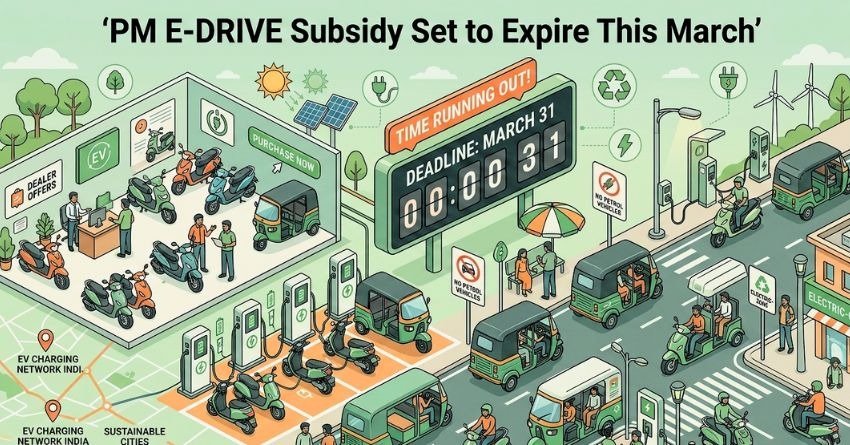
India’s EV market is now approaching the final weeks of the PM E-DRIVE Scheme, which is set to end on March 31, 2026. With the deadline getting closer, the industry is entering what could be the last big push under the scheme.
Dealers are already expecting more people to come in this month to buy electric vehicles while the subsidy is still available. Over the past two years, the program has helped bring down the upfront price of EVs, especially electric two-wheelers and three-wheelers that account for a large share of EV sales in India.
Final Month Rush Expected
Industry players expect showroom visits to pick up significantly through March as customers try to lock in the subsidy before the deadline passes. The PM E-DRIVE scheme replaced the earlier FAME II Scheme and continued the government’s push to make electric mobility more affordable.
The incentives helped narrow the price gap between electric scooters and traditional petrol-powered vehicles. According to several manufacturers, bookings have already started picking up as awareness about the deadline spreads. customers know that once the subsidy ends, the effective purchase price of many electric scooters could rise noticeably.
Target Of 24.7 Lakh Electric Two-Wheelers
The program was designed with a clear objective: support the registration of 24.7 lakh electric two-wheelers during its two-year period from April 2024 to March 2026. Government data indicates the industry is now close to reaching that target as March begins. The scheme has a total budget of around ₹10,900 crore.
This funding has been used not only to offer purchase incentives on vehicles but also to support the rollout of charging infrastructure.
Because of this support, buying an EV became easier for many first-time customers. At the same time, it gave manufacturers the confidence to increase production and expand their electric vehicle lineup.
Visible Changes In The Market
The effect of the scheme is already visible in many cities. Electric two-wheelers, which were once seen as a niche option, are now a regular sight on daily commutes, especially in urban areas.
At the same time, the electric three-wheeler segment has grown quickly in both cargo and passenger transport. In several city clusters, a large share of rickshaws and small delivery vehicles have already shifted to electric. Lower running costs, along with the government incentives, have made EVs a practical choice for everyday riders as well as small businesses.
What Happens After March 31
While the consumer subsidy under the PM E-DRIVE Scheme is about to end, government support for EV manufacturing will continue through initiatives like the Production Linked Incentive Scheme, which runs until 2028.
What will change after March 31 is the direct discount customers receive while purchasing an EV. Once the deadline passes, that upfront price support will no longer be available. So far, the government hasn’t indicated whether a new program or a possible “PM E-DRIVE 2.0” is being planned. Many industry observers believe the expectation now is for the EV sector to keep growing on its own, helped by higher production volumes and gradually falling battery costs.
Customers Urged To Complete Registration Early
Dealerships are encouraging customers not to leave things until the last few days of the month. To receive the subsidy, the vehicle must be purchased and successfully registered on the portal before March 31.
People in the industry say waiting too long could be risky. As the deadline gets closer, paperwork delays or heavy traffic on the registration system could slow things down for customers trying to complete the process. With the clock ticking, March is expected to be an unusually busy month for India’s EV market.