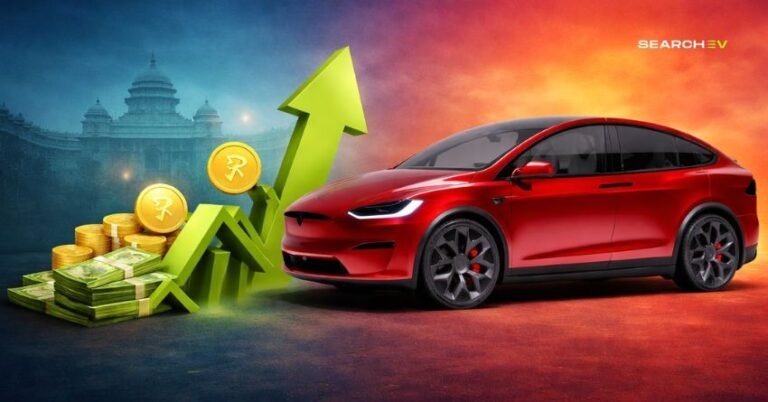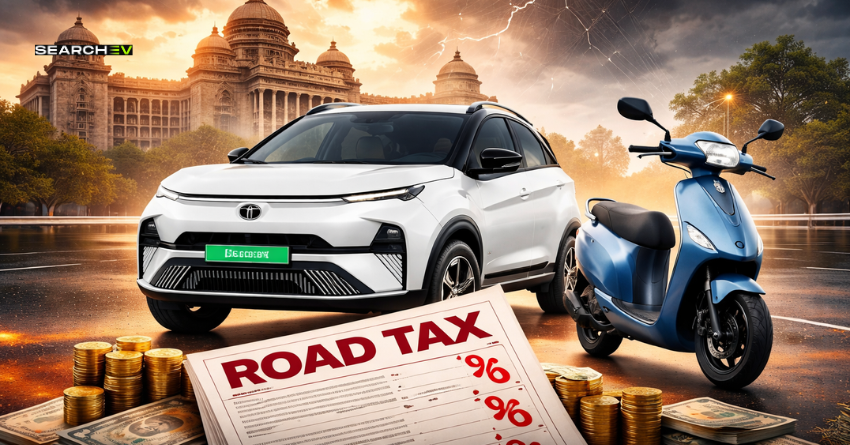
Karnataka is planning to phase out its 100% road tax exemption for electric vehicles in favour of a tiered lifetime tax of up to 10%, which industry experts warn will significantly delay EV adoption.The shift to electric vehicles is likely to encounter a significant financial speed bump in India’s tech capital. The Karnataka government has passed a bill to end its 100% road tax exemption for electric cars, replacing it with a steep lifetime tax. Industry stakeholders are raising the alarm, cautioning that ending subsidies too soon will seriously impair the state’s EV adoption rate, while the administration justifies the action as a vital revenue-generating act.
From Exemption to Taxation
Karnataka was one of the first states to really back electric mobility. Back in March 2016, it scrapped road tax on EVs altogether to accelerate adoption. Now, under the proposed Karnataka Motor Vehicles Taxation (Amendment) Bill, 2026, electric cars will face a structured lifetime tax. The rates depend on their ex-showroom price:
- Up to ₹10 lakh: 5% road tax.
- Between ₹10 lakh and ₹25 lakh: The tax jumps to 8%.
- Above ₹25 lakh: Premium EVs will continue to attract a 10% tax
That said, the state isn’t pulling back across the board, as electric two-wheelers will still become the backbone of EV volumes with continuation to remain exempted.
The Justification vs. The Backlash
The rapid pullback was motivated solely by financial concerns. Transport Minister Ramalinga Reddy defended the law, noting that the new tax system is aimed to raise additional funds, with the state expected to generate ₹259 crore from the taxes. The administration basically claims that EV sales have reached a point where indefinite exemptions are no longer financially viable for the state budget.
However, the numbers tell a different story. EVs account for only 4.1 lakh of Bengaluru’s 1.2 crore registered vehicles as of February 2026. Furthermore, electric cars account for a miniscule portion of the pie, with only 37,365 units compared to 3.2 lakh electric two-wheelers.
Experts argue that any policy that pushes up the upfront cost of EVs chips away at their biggest advantage: affordability over time. In a city already battling congestion and pollution, that could slow down the shift to cleaner mobility.
Losing the Competitive Edge
When compared to the larger national environment, Karnataka’s tax increase is even more noticeable.
Not too long ago, the state was leading from the front. In 2025, Karnataka accounted for roughly 9% of India’s total EV sales (nearly 2 lakh units ), making it the third-largest EV market after Uttar Pradesh and Maharashtra.
Now, the state risks deterring buyers from adopting electric cars as neighboring and rival states maintain far more attractive tax environments. While Karnataka pushes taxes up to 10%, Gujarat levies 1%. In fact, states like Tamil Nadu and Maharashtra give 100% waiver on EV road tax.
Ultimately, while the proposed tax on EVs remains lower than that of traditional petrol and diesel vehicles, the high upfront cost of electric cars combined with this new financial burden means buyers in Karnataka will have to think twice before going green.