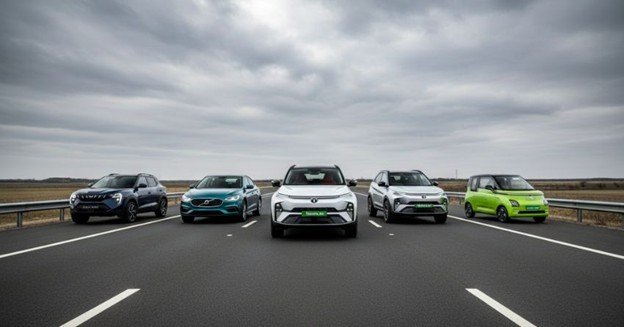
Tata has been a dominant player in the EV space for a long time in India. In fact, 66% of all the electric cars sold in India are from Tata (Source: Tata Press Release). Their dominance is fueled by a versatile lineup that provides accessible options across every budget.
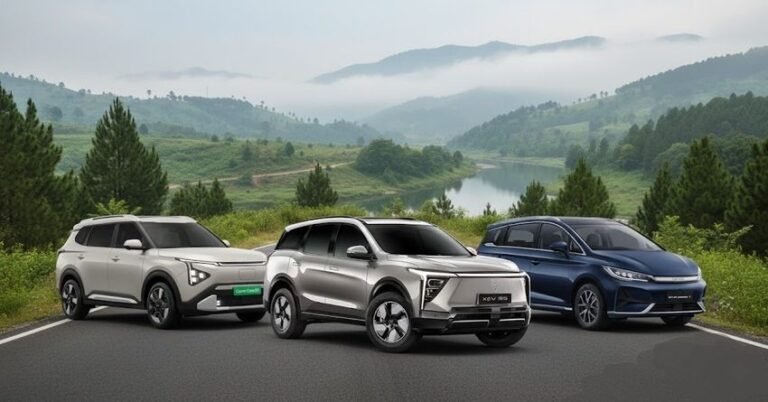
While brands like Mahindra, MG and Vinfast are finding their way to share the market, Tata continues to remain at the forefront. In November 2025, the brand sold nearly 6,000 units, remaining well ahead of its competitors.
Behind the scenes, Sierra EV is shaping up to be one of the most anticipated new models. While the ICE-powered Sierra is now on the road, Tata is fueling consumer interest by delaying the release of its electric cousin.
The launch of this model follows the same strategy Tata has used with its other cars, where a phased rollout helps the brand understand demand, adjust pricing and place the vehicle more effectively in the market.
With the Sierra EV set to debut in early 2026, the growing buzz around the model suggests it might join the list of India’s best-selling electric vehicles that year. Ahead of its launch, there are a few key details about Tata’s planned electric SUV.
1. Like ICE but an EV
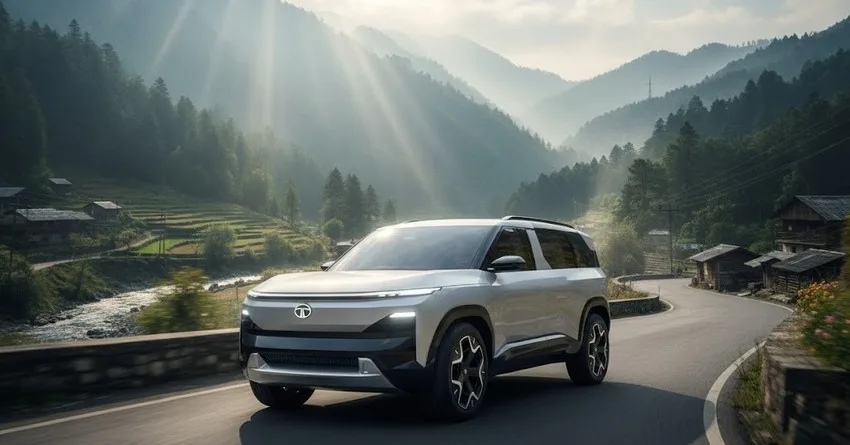
The Sierra EV retains its ICE sibling’s robust, upright look, filled with distinctive alpine windows that lend it a strong retro-modern style. A fully closed-off front fascia, slimmer bumper treatment, and a streamlined LED light bar give it a cleaner, more aerodynamic look. The lack of an exhaust at the back adds to the vehicle’s electric flair.
2. The Cabin
The Sierra EV will get Tata’s most recent luxury interior designs, and according to sources, the dashboard will come equipped with a triple-screen display, a panoramic sunroof, ventilated front seats, ambient lighting, and wireless charging. These features show that this model will be a comfortable, technologically advanced family SUV rather than a traditional electric vehicle.
3. Practical EV Tech for Everyday Use
Beyond convenience, Tata plans to equip the Sierra EV with V2L and V2V capabilities, and this would allow the SUV to power external devices or even charge another electric car in times of an emergency. These features provide real-world utility, extending beyond impressive range and performance.
Furthermore, reports suggest that this model will have a multi-link rear suspension system to improve ride comfort and stability, especially on tough terrains.
4. The Expected Range
While Tata Motors has not yet confirmed the key specifications, industry rumours suggest that this one will get multiple battery pack options, similar to what is expected with the Harrier EV. The top model is said to get a range of up to 500 km. In real-world settings, this might equate to 400-430 km, making the Sierra EV ideal for both long highway drives and daily urban use.
5. AWD Makes Its Debut in EV First
The drivetrain is a significant difference between the ICE and electric Sierras. The ICE version begins with front-wheel drive, but the Sierra EV is slated to provide rear-wheel drive and all-wheel drive from the start. Tata can also introduce AWD more efficiently with dual-motor systems on EV platforms, potentially making the Sierra EV one of India’s more accessible AWD electric SUVs.
The Tata Sierra EV is likely to be available with two battery pack configurations. It will most likely use the same 65 kWh and 75 kWh batteries as the Harrier EV, which are available in both 2WD and AWD variants. However, the Sierra EV’s powertrain outputs are expected to be slightly decreased, focusing on practicality rather than pure performance.
6. Strategic EV Portfolio
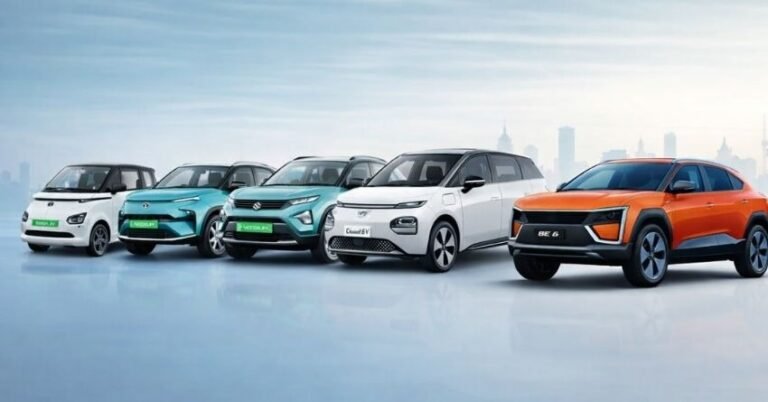
Tata is known for giving its vehicles a distinct personality, and its EV lineup follows likewise. Instead of competing with its own models, each electric SUV is intended for all kinds of customers. The Curvv EV is geared for customers who value style and cutting-edge technology, whereas the Harrier EV is aimed at those looking for a more premium and performance-oriented experience. The Sierra EV falls somewhere in the middle, emphasising size, practicality, and a touch of nostalgia, making it an excellent family choice.
7. Pricing, Rivals
The Tata Sierra EV is expected to cost between ₹15 and ₹25 lakh, higher than the ICE variant, which starts at ₹11 lakh (ex-showroom). That said, several crucial details are still under wraps, like the warranty, charging details, and a lot more. Once available, it will compete with the Mahindra BE.06, Hyundai Creta Electric, and MG ZS EV.
Why the Sierra EV Matters
The Tata Sierra EV will definitely strike a balance between modern EV technology and everyday usability, making it an easy step up for customers who want to move from petrol or diesel cars. With likely AWD options, an impressive real-world driving range and a design that blends nostalgia with practicality, the Sierra EV become the top-selling model in India for the year 2026.
The Tata Sierra EV is expected to launch by March 2026, with prices likely to fall between ₹16 lakh and ₹25 lakh.
What More Can We Expect?
As per the latest sources, the electric Sierra has already been spotted testing on Indian roads without an exhaust pipe, showing its EV credentials. These test sightings indicate that Tata is well into the development process, with the SUV reaching final production readiness ahead of launch. With all the known features and data, the Sierra EV will also include fast charging, advanced safety features like ADAS, multiple drive modes, and a long battery warranty.
If Tata succeeds in getting the formula right, the Sierra EV might rank among the most practical and feature-rich electric SUVs.